
Artificial Intelligence (AI) is no longer a futuristic concept found only in science fiction movies. Today, it is part of our everyday lives, often working behind the scenes to make daily tasks easier, faster, and more convenient. Whether you’re unlocking your smartphone with facial recognition, asking a virtual assistant for the weather, receiving personalized shopping recommendations, or navigating traffic with GPS, you’re already using AI.
For beginners, AI may seem like a complex technology, but its real-world applications are surprisingly simple and practical. It helps people save time, improve productivity, enhance communication, and make better decisions in both personal and professional life.
In this guide, you’ll learn what AI is, how it works, where you encounter it every day, its benefits and limitations, and how you can start using AI confidently.
What Is Artificial Intelligence?

Artificial Intelligence refers to computer systems that can perform tasks that normally require human intelligence. These tasks include learning from data, recognizing speech and images, understanding language, solving problems, making predictions, and even creating content.
Unlike traditional software that follows fixed instructions, AI can improve its performance by analyzing patterns and learning from experience.
How Does AI Work?
AI works by processing large amounts of data and identifying patterns. Using technologies such as Machine Learning (ML) and Deep Learning, AI systems continuously improve as they receive more information.
A simple AI process includes:
- Collecting data
- Learning from patterns
- Making predictions or decisions
- Improving accuracy over time
For example, a music streaming app studies your listening habits and recommends songs based on your preferences.
AI in Daily Life: Everyday Examples

Most people use AI several times each day without realizing it.
1. Smartphones
Modern smartphones use AI for:
- Face unlock
- Voice assistants
- Camera enhancements
- Battery optimization
- Predictive text
AI automatically improves photo quality, recognizes faces, and suggests replies to messages.
2. Voice Assistants
Virtual assistants can answer questions, set reminders, play music, send messages, and control smart home devices using simple voice commands.
3. Navigation Apps
Navigation applications analyze live traffic, accidents, and road conditions to recommend the fastest routes and estimate arrival times.
4. Online Shopping
Shopping platforms use AI to:
- Recommend products
- Suggest similar items
- Detect fraudulent transactions
- Personalize offers
This creates a more customized shopping experience.
5. Video and Music Streaming
Streaming platforms recommend movies, TV shows, podcasts, and songs based on your viewing and listening history.
The more you use these services, the better the recommendations become.
Benefits of AI in Daily Life
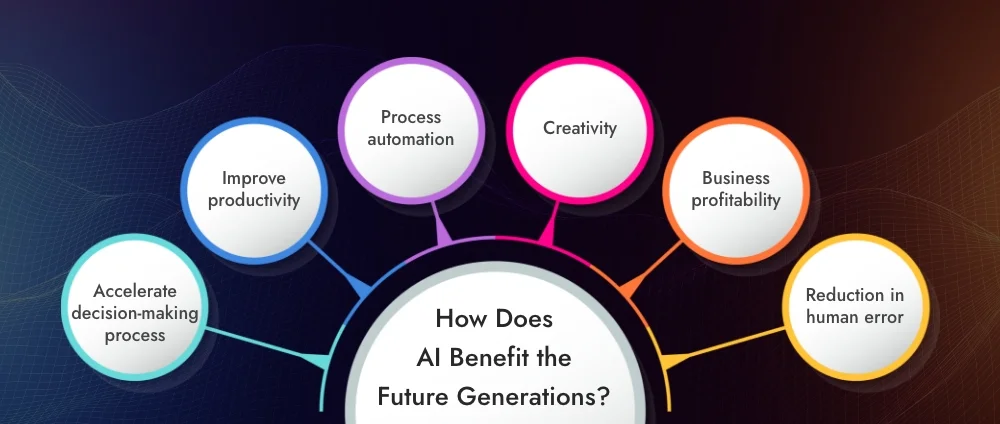
AI offers many practical advantages.
- Saves time by automating repetitive tasks
- Increases productivity at work and home
- Improves accuracy in many tasks
- Provides personalized recommendations
- Enhances online security
- Makes information easier to access
- Supports better decision-making
- Improves customer service through chatbots
- Simplifies learning with intelligent educational tools
These benefits allow individuals and businesses to work more efficiently.
AI at Work

Many workplaces now use AI to improve efficiency.
Examples include:
- Writing and editing documents
- Scheduling meetings
- Analyzing business data
- Automating customer support
- Creating marketing content
- Managing projects
- Translating languages
- Generating reports
Rather than replacing every job, AI often handles repetitive tasks so people can focus on creative thinking, strategy, and problem-solving.
AI in Education

Students and teachers benefit from AI through:
- Personalized learning experiences
- Instant feedback
- Language translation
- Online tutoring
- Writing assistance
- Research support
- Practice quizzes
AI can make learning more interactive and accessible, though students should still develop their own understanding instead of relying entirely on AI-generated answers.
Challenges of AI
Although AI provides many advantages, it also comes with challenges.
Some common concerns include:
- Privacy and data protection
- AI-generated misinformation
- Bias in AI systems
- Job changes due to automation
- Dependence on technology
- Ethical use of AI
Understanding these limitations helps users make informed decisions and use AI responsibly.
Tips for Beginners Using AI

If you’re new to AI, start with simple tasks and gradually explore more advanced features.
- Use AI to summarize articles.
- Ask AI to explain difficult concepts.
- Create daily to-do lists.
- Generate writing ideas.
- Translate text into different languages.
- Organize schedules.
- Brainstorm project ideas.
- Learn new skills through AI-powered learning tools.
Always review AI-generated information for accuracy, especially when making important decisions.
The Future of AI in Daily Life
AI is expected to become even more integrated into everyday life. Future developments may include:
- Smarter virtual assistants
- More advanced healthcare tools
- Self-driving transportation
- Intelligent home automation
- Personalized education
- Faster business automation
- Improved accessibility tools for people with disabilities
As AI technology continues to evolve, it will likely create new opportunities while also requiring thoughtful and responsible use.
Artificial Intelligence is already transforming the way people live, work, learn, and communicate. From smartphones and navigation apps to healthcare, education, banking, and entertainment, AI has become an essential part of modern life. For beginners, the best approach is to start with simple, everyday applications and gradually explore more advanced AI tools.
By understanding both the benefits and the limitations of AI, you can use this technology more effectively and confidently. As AI continues to evolve, learning how it works today will help you stay prepared for the innovations of tomorrow.
Frequently Asked Questions
1. What is AI in daily life?
AI in daily life refers to the use of artificial intelligence in everyday technologies such as smartphones, voice assistants, navigation apps, online shopping, healthcare, and smart home devices.
2. Is AI difficult for beginners?
No. Many AI-powered tools are designed to be user-friendly and require little to no technical knowledge.
3. What are the main benefits of AI?
AI helps save time, improve productivity, automate routine tasks, personalize experiences, enhance security, and support better decision-making.
4. Can AI replace humans?
AI can automate certain repetitive tasks, but human creativity, critical thinking, empathy, and judgment remain essential in many fields.
5. How can I start using AI?
Begin with everyday AI tools such as virtual assistants, AI writing tools, translation apps, navigation services, and smart productivity applications.