
Artificial Intelligence (AI) has become one of the most talked-about technologies in the world, and for good reason. From unlocking your smartphone with facial recognition to receiving personalized movie recommendations or asking a virtual assistant about the weather, AI is already a part of everyday life. It works quietly in the background, helping businesses, improving healthcare, supporting education, and making digital services faster and more personalized.
Although AI may sound complex, understanding its basics doesn’t require a technical background. At its core, artificial intelligence is about creating computer systems that can perform tasks that normally require human intelligence. These tasks include learning from data, recognizing patterns, understanding language, solving problems, and making decisions.
As AI continues to shape the future of work, communication, and innovation, learning its fundamentals has become valuable for students, professionals, entrepreneurs, and anyone interested in technology. This guide explains the core concepts of AI in simple language, explores how it works, highlights real-world applications, and discusses its benefits, challenges, and future.
What Is Artificial Intelligence?
Artificial Intelligence (AI) is a branch of computer science that focuses on building systems capable of performing tasks that usually require human intelligence. Instead of simply following fixed instructions, AI systems can analyze information, recognize patterns, make predictions, and improve their performance based on experience and data.
For example, when a music streaming service recommends songs based on your listening habits or an online store suggests products you might like, AI is working behind the scenes. Similarly, navigation apps use AI to predict traffic and recommend the fastest route.
The goal of AI is not to think exactly like humans but to help solve problems efficiently and assist people in making better decisions.
How Does AI Work?
AI works by processing large amounts of data and identifying patterns within that data. It uses algorithms, mathematical models, and computing power to learn from examples and improve its accuracy over time.
The process usually involves four main steps:
- Collecting relevant data.
- Analyzing patterns and relationships.
- Learning from previous results.
- Making predictions or decisions based on new information.
The more high-quality data an AI system receives, the better it generally performs. However, good data alone is not enough. The algorithms must also be designed and tested carefully to produce reliable outcomes.
Types of Artificial Intelligence
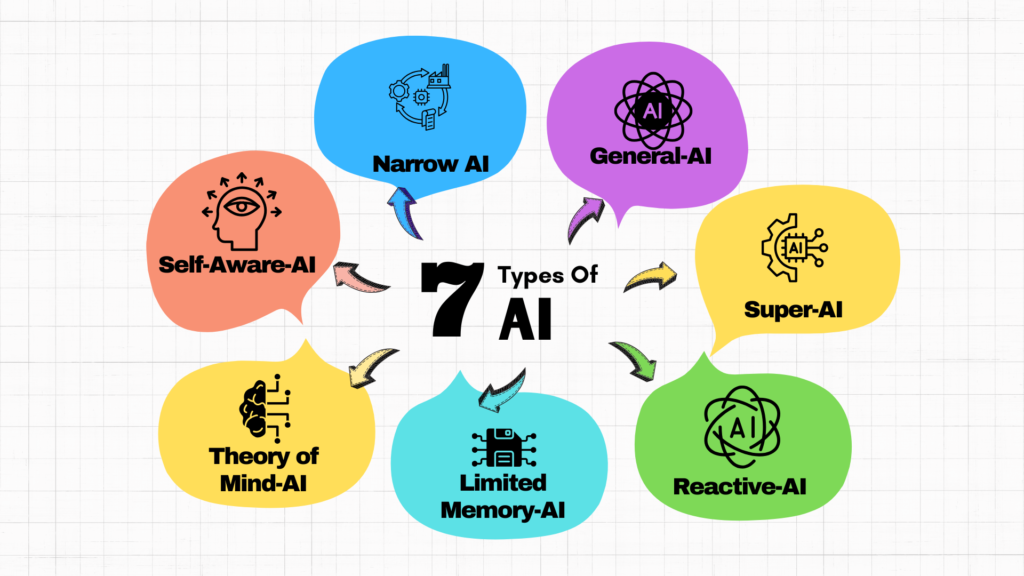
AI is commonly grouped into different categories based on its capabilities.
Narrow AI is designed to perform a specific task. Most AI systems used today fall into this category. Examples include virtual assistants, recommendation systems, spam filters, and customer support chatbots.
General AI refers to a theoretical form of AI that would be capable of performing any intellectual task a human can do. While researchers continue to explore this concept, General AI does not yet exist.
Another way to classify AI is by its functionality, ranging from simple reactive systems to more advanced systems that can learn, adapt, and make increasingly sophisticated decisions.
Understanding Machine Learning

One of the most important areas of AI is Machine Learning (ML).
Machine learning allows computers to learn from data instead of relying entirely on manually programmed rules. Rather than telling a computer exactly what to do in every situation, developers provide examples, and the system learns patterns from those examples.
For instance, an email service can learn to recognize spam messages by analyzing thousands of previous emails. As it receives more data, it becomes better at identifying unwanted messages.
Machine learning powers many everyday technologies, including recommendation systems, fraud detection, medical diagnosis support, and predictive analytics
What Is Deep Learning?
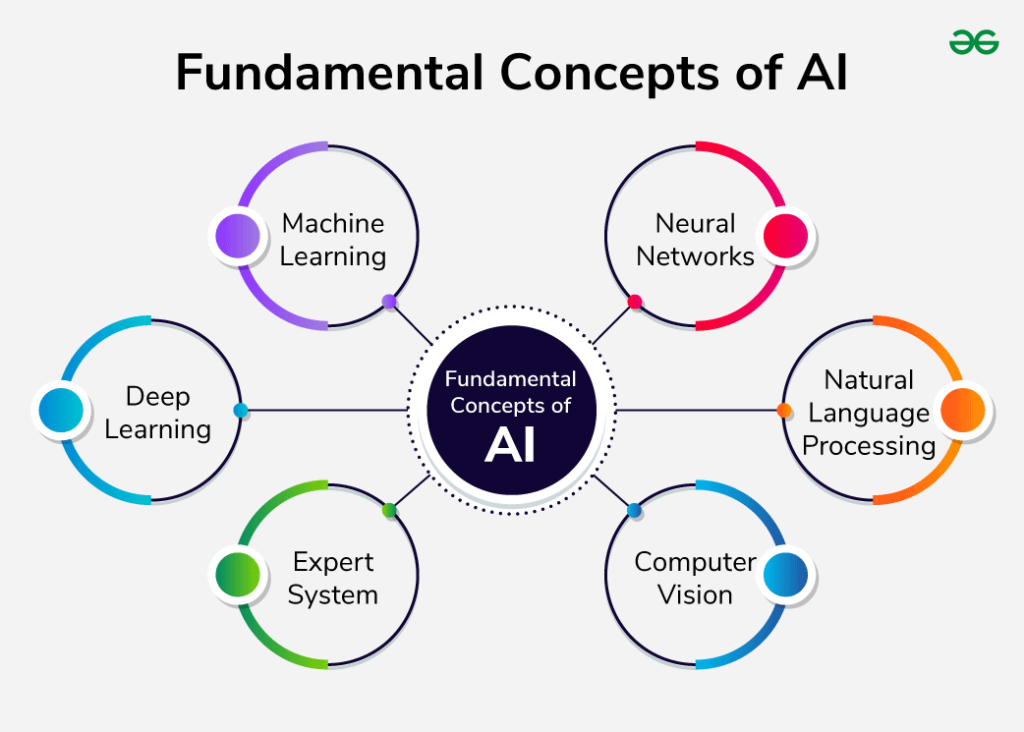
Deep Learning is a specialized branch of machine learning that uses artificial neural networks inspired by the structure of the human brain.
Deep learning excels at handling complex tasks such as image recognition, speech recognition, language translation, and self-driving technology.
For example, facial recognition systems can identify people in photographs, while voice assistants understand spoken commands through deep learning models.
Although deep learning requires significant computing power and large datasets, it has enabled many of the recent advances in AI.
Real-World Applications of AI
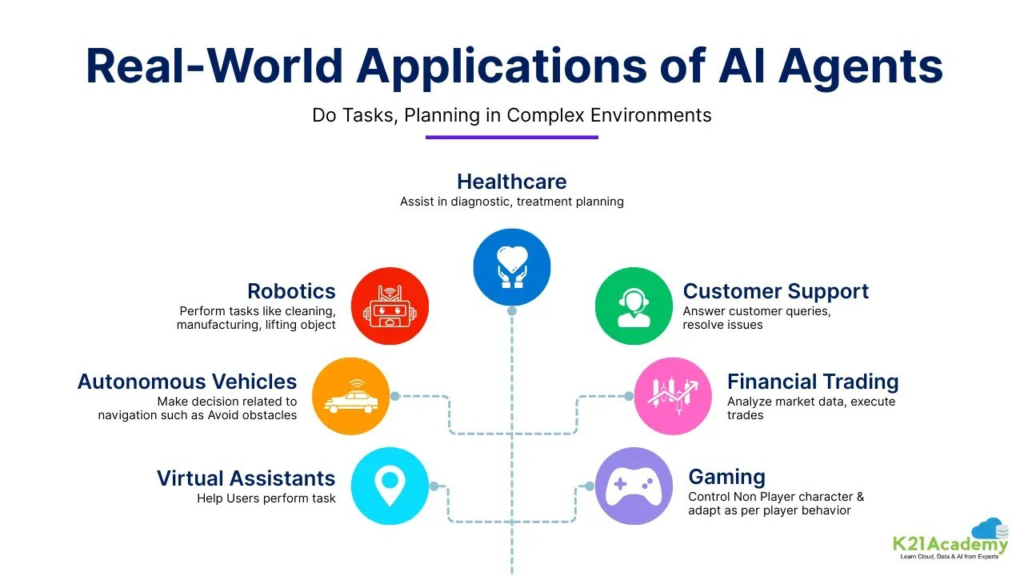
Artificial intelligence is transforming almost every industry.
In healthcare, AI helps doctors analyze medical images, support diagnosis, and improve patient care.
In education, AI personalizes learning experiences, recommends study materials, and assists teachers with administrative tasks.
In finance, AI detects fraud, analyzes financial markets, and improves customer service.
Retail businesses use AI to recommend products, manage inventory, and forecast customer demand.
Manufacturing companies rely on AI for quality control, predictive maintenance, and process automation.
Transportation systems use AI for route optimization, traffic prediction, and autonomous vehicle research.
Even entertainment platforms use AI to recommend movies, music, and videos based on user preferences.
Benefits of Artificial Intelligence
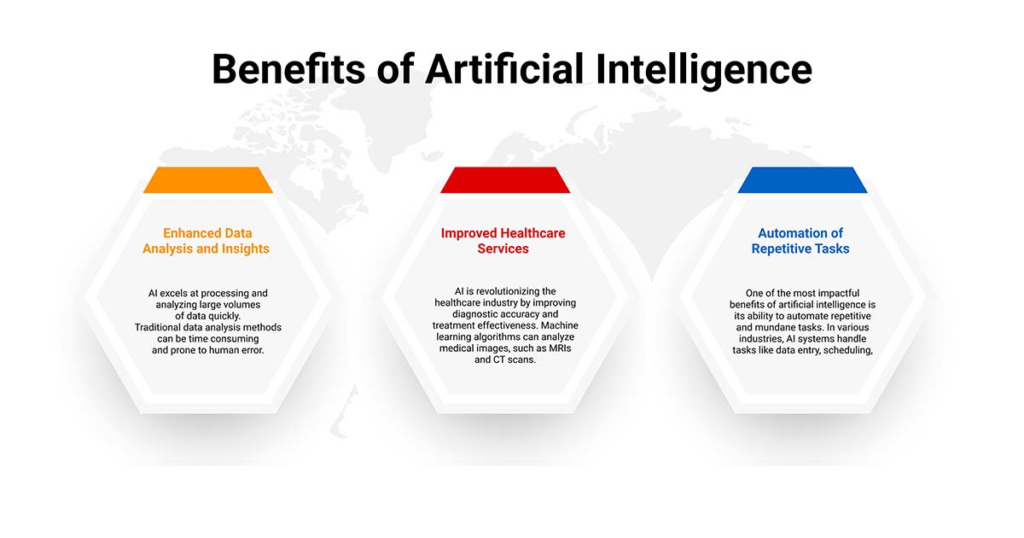
AI offers many advantages for individuals, businesses, and society.
One of its biggest strengths is improving efficiency by automating repetitive tasks. This allows employees to focus on creative, strategic, and problem-solving activities.
AI can analyze enormous amounts of information much faster than humans, helping organizations make more informed decisions.
Businesses use AI to improve customer service, reduce costs, increase productivity, and personalize user experiences.
For consumers, AI often means faster services, smarter recommendations, better navigation, and more convenient digital experiences.
Challenges and Limitations of AI
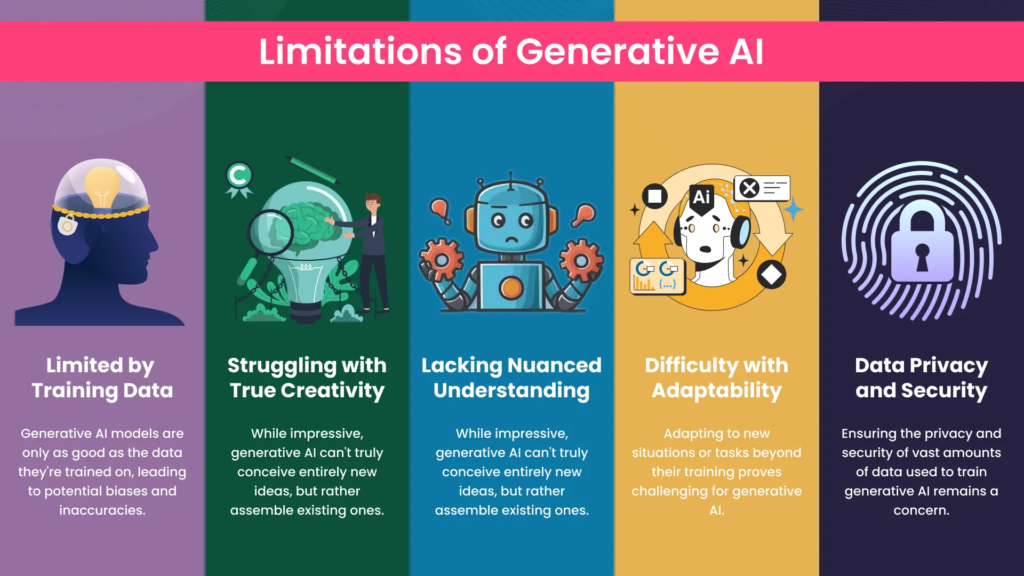
Despite its many benefits, AI also presents important challenges.
AI systems depend heavily on the quality of the data they receive. Inaccurate or biased data can produce unreliable or unfair results.
Privacy and data security remain major concerns because many AI applications process large amounts of personal information.
Another challenge is transparency. Some advanced AI models can make decisions that are difficult for people to fully understand or explain.
There are also concerns about how automation may change certain jobs, making continuous learning and skill development increasingly important.
Responsible development and careful human oversight help address many of these challenges.
AI and the Future of Work

Artificial intelligence is changing how people work rather than simply replacing jobs.
Many routine administrative tasks can now be automated, allowing employees to spend more time on activities that require creativity, communication, leadership, and critical thinking.
New career opportunities are also emerging in fields such as AI engineering, machine learning, data science, robotics, cybersecurity, and AI ethics.
Professionals who understand AI fundamentals and continue learning new digital skills will be better prepared for the evolving workplace.
How to Start Learning AI
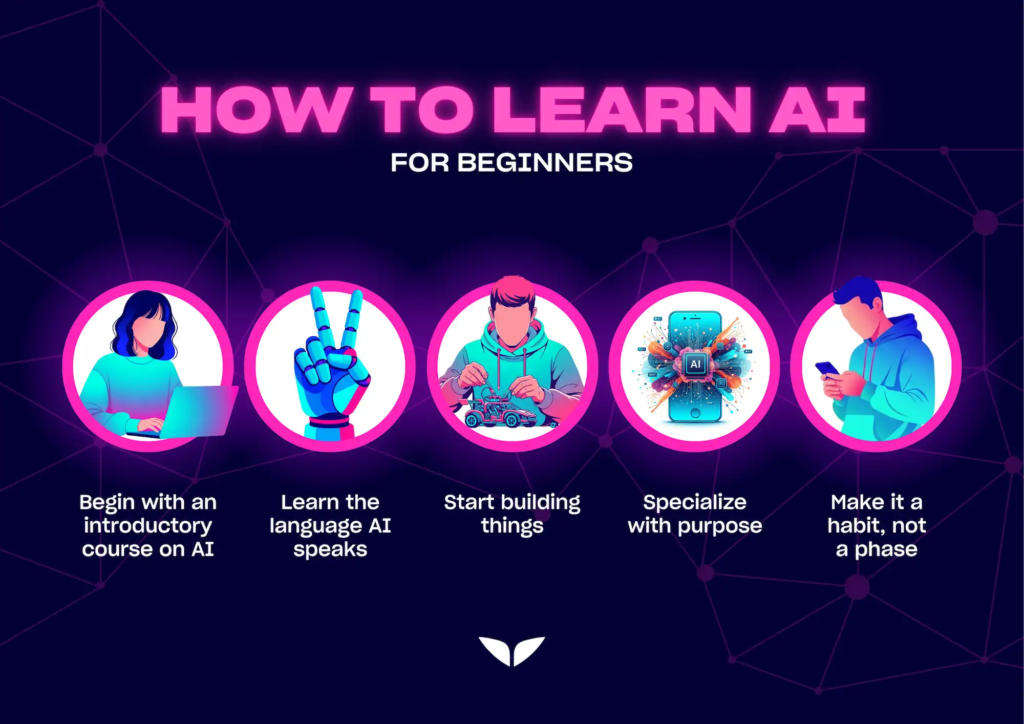
Learning AI is easier than many beginners expect.
Start by understanding the basic concepts before exploring machine learning, deep learning, and data analysis.
There are many online courses, books, tutorials, and interactive learning platforms that explain AI in beginner-friendly language.
You don’t need to become a programmer immediately. Building a strong understanding of how AI works and where it is used provides an excellent foundation.
As your knowledge grows, you can gradually explore programming languages such as Python and experiment with beginner AI projects.
Future Trends in Artificial Intelligence
AI continues to evolve rapidly.
Generative AI is helping people create text, images, videos, music, and computer code more efficiently.
AI assistants are becoming more capable of understanding natural conversations and supporting everyday tasks.
Businesses are investing in AI-powered automation, predictive analytics, and personalized customer experiences.
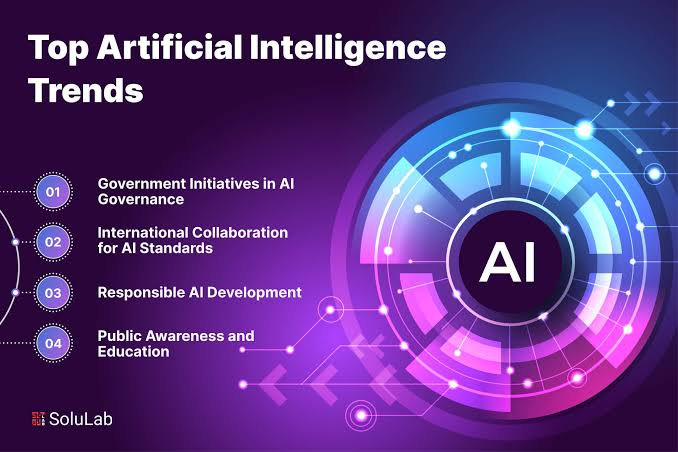
At the same time, governments, researchers, and technology companies are working to improve AI safety, transparency, fairness, and responsible use.
The future of AI will likely involve greater collaboration between humans and intelligent systems across nearly every industry.
FAQs
1. What is Artificial Intelligence (AI)?
Artificial Intelligence is a field of computer science that enables machines to perform tasks that typically require human intelligence, such as learning, reasoning, problem-solving, language understanding, and decision-making.
2. Is AI the same as Machine Learning?
No. Machine Learning is a subset of AI. AI is the broader concept of creating intelligent systems, while Machine Learning focuses on enabling systems to learn from data without being explicitly programmed for every task.
3. Where is AI used in everyday life?
AI is used in virtual assistants, search engines, streaming recommendations, online shopping, navigation apps, customer support chatbots, healthcare, banking, social media, and smart home devices.
4. Do I need programming skills to learn AI fundamentals?
No. Beginners can start by learning AI concepts, applications, and terminology. Programming skills, especially Python, become useful as you move into building AI models and applications.