
AI is no longer a sci-fi concept tucked away in research labs—it is woven into our daily lives. From smart chatbots and streaming recommendation feeds to diagnostic tools in healthcare, automated fraud detection in finance, personalized learning platforms, and corporate decision-making tools, AI is speeding up how we work and live. But as these technologies gain unprecedented power, the ethical stakes have skyrocketed.
AI ethics is all about making sure artificial intelligence is designed, built, and deployed in ways that are fair, transparent, accountable, safe, and respectful of human dignity. Moving through 2026, this is no longer just a theoretical debate for tech executives and academics. Business leaders, software developers, lawmakers, and everyday citizens all have an active stake in shaping how AI impacts society.
1. What Is AI Ethics?

At its core, AI ethics is a structured framework of moral principles and practical guidelines designed to ensure artificial intelligence serves humanity responsibly. It forces us to ask tough, practical questions before pushing automated tools into the real world:
- Fairness: Is the algorithm treating every group of people equitably, or is it favoring certain demographics over others?
- Transparency: Can a regular person understand how a life-altering automated decision was actually calculated?
- Data Security: Is personal privacy being respected and protected from unauthorized data scraping?
- Accountability: When an automated system makes a high-stakes mistake, who takes the fall—the developer, the business, or the software itself?
- Recourse: Can a user appeal, challenge, or correct an automated judgment if it turns out to be flat-out wrong?
- Safety: Is the tool operating reliably without creating physical, emotional, or financial harm?
The primary objective of AI ethics isn’t to strangle technical innovation or slow down useful progress. Instead, it aims to build a solid foundation of public trust, ensuring that fast-paced technological breakthroughs bring genuine, safe value to society.
2. Why AI Ethics Demands Our Attention Right Now
AI systems are moving rapidly from low-risk recommendation engines to high-stakes decision-makers. Algorithms are actively evaluating job resumes, flagging bank transactions, setting insurance rates, assisting surgeons in operating rooms, and deciding what news stories billions of people consume.
When these systems run as intended, they save massive amounts of time and unlock brilliant operational efficiencies. But when models are poorly trained or deployed carelessly, the fallout can be immediate and severe:
- Amplifying Historical Bias: An AI trained on skewed historical hiring data will quickly learn to replicate those exact human prejudices, systematically rejecting qualified candidates.
- Invasive Data Collection: Vacuuming up mountains of personal user data without explicit consent creates major privacy risks and leaves sensitive identity details exposed to breaches.
- Dilution of Human Judgment: Relying blindly on automated tools can erode human critical thinking, leaving organizations completely vulnerable when an algorithm misinterprets a complex situation.
Because AI adoption is compounding across every industry, ethical safeguards cannot be treated as an afterthought or a PR cleanup tool after launch. They must be baked into the architecture of technology from day one.
3. The Core Principles of Responsible AI
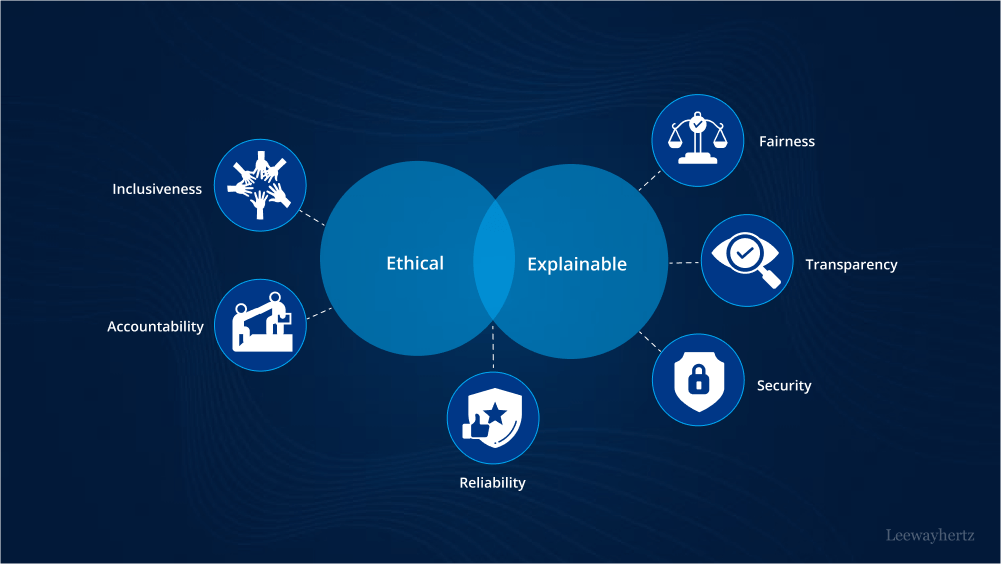
Building trustworthy technology isn’t a matter of luck—it requires sticking to key design principles that prioritize safety, fairness, and human control.
Fairness and Mitigating Algorithmic Bias
AI algorithms don’t invent their own opinions; they spot patterns in existing data. If the dataset feeding the model contains historical inequality, geographic imbalances, or social biases, the AI will mirror those flaws and amplify them at scale.
To counter algorithmic bias, organizations must rigorously audit their training data across diverse demographic groups. Hiring diverse development teams is equally crucial, as different perspectives help spot blind spots long before software hits the market. Fairness doesn’t mean treating every input identically; it means crafting systems that prevent unjust discrimination and deliver rational, balanced outcomes for everyone involved.
Transparency and “Explainability”
People have a right to understand how automated decisions affect their lives. If a bank denies someone a loan or a hospital prioritizes one patient over another using an algorithm, the reasoning shouldn’t be hidden inside a complex “black box.”
Transparency ranges from simple notifications—like letting customers know they are chatting with a bot rather than a human—to high-level explainable AI (XAI) systems that can map out the specific variables that produced a given output. When systems are transparent, flaws are easier to catch, and trust is far easier to build.
Privacy and Data Protection
Because high-performing AI relies heavily on vast data streams, privacy sits at the very heart of ethical development. Companies must move away from reckless data harvesting and adopt strict data minimization strategies—collecting only the precise information necessary for the task.
Robust data protection involves encrypting personal records, anonymizing sensitive details, and being completely honest with users about how their digital footprint is being utilized. Building privacy into the software architecture drastically cuts down the risk of security breaches, unauthorized surveillance, and corporate misuse.
Safety, Quality Control, and Reliability
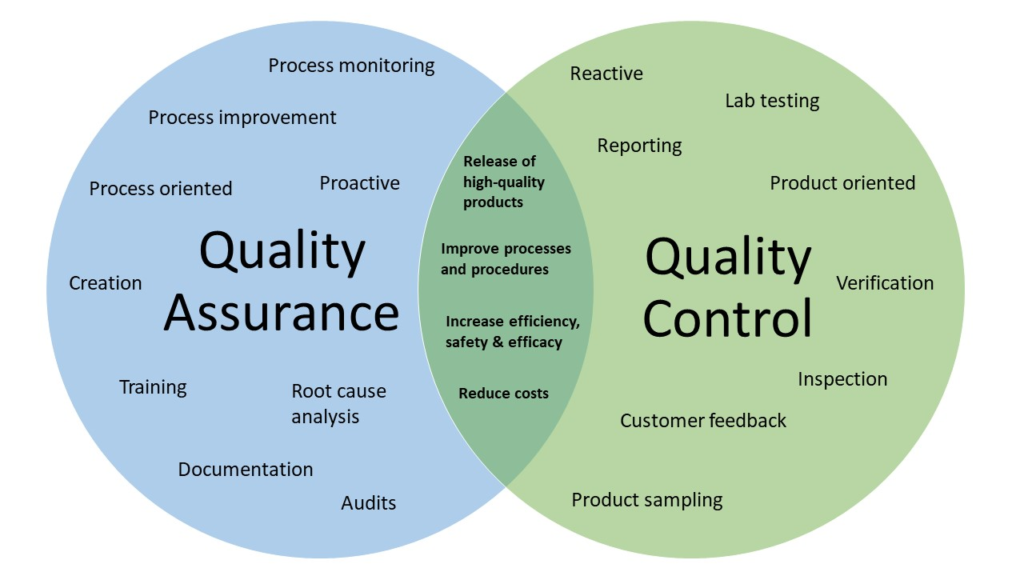
A great AI system isn’t just fast and smart; it is predictable, stable, and safe under stress. Before rolling out automated tools, developers must run exhaustive stress tests to check for software bugs, security loopholes, adversarial attacks, and toxic outputs.
Because machine learning models evolve as they process new real-world data, continuous post-launch monitoring is vital. A system that ran perfectly in a controlled testing environment might behave unexpectedly when exposed to live human behavior, making ongoing safety audits non-negotiable.
Accountability and Ownership
When an autonomous vehicle misinterprets a road sign or an automated medical system misdiagnoses a patient, claiming “the algorithm made a mistake” is completely unacceptable. Human beings and organizations must remain ultimately responsible.
Establishing clear accountability means defining explicit ownership throughout the tech pipeline. Organizations need dedicated teams tasked with monitoring system health, conducting independent compliance audits, maintaining detailed documentation, and maintaining clear escalation paths to fix errors when things break down.
Keeping Humans in the Loop

AI is at its best when it augments human capability, not when it completely replaces human wisdom. Preserving human oversight—often referred to as keeping a “human in the loop”—is imperative for high-consequence fields like law enforcement, military defense, healthcare, hiring, and financial lending.
Maintaining human oversight ensures that automated flags are reviewed by real people who bring empathy, contextual awareness, and ethical reasoning to the table—acting as a vital safety net against algorithmic error.
4. Overcoming Modern AI Challenges
As generative models, synthetic media, and autonomous agents expand, fresh ethical hurdles are emerging that require urgent attention.
Fighting AI Hallucinations
Generative AI models are famous for speaking with absolute confidence, even when they are spouting complete fiction. These AI hallucinations can trick unsuspecting users into accepting false legal precedents, incorrect medical advice, or inaccurate historical facts as truth.
To prevent real-world harm, automated text and data must be verified against primary sources, and high-risk outputs should always be vetted by qualified subject-matter experts before execution.
Deepfakes, Misinformation, and Synthetic Media

The rapid rise of hyper-realistic AI voice clones and synthetic video generators has made it dangerously easy to create convincing deepfakes. While these tools hold exciting potential for film production and creative arts, they also fuel election interference, corporate fraud, and targeted harassment.
Tackling this challenge requires widespread adoption of content authentication standards, clear digital watermarking on synthetic media, transparent disclosures, and strict legal boundaries regarding personal consent.
Intellectual Property and Creator Rights
Generative models require massive datasets of human art, literature, code, and journalism to learn how to create. This has sparked heated legal and ethical conflicts regarding copyright infringement and the fair treatment of human creators.
Ethical organizations must respect intellectual property rights, prioritize transparent data sourcing, respect opt-out preferences, and establish fair licensing models rather than assuming public internet data is free for commercial exploit.
Workforce Transitions and Automation
While automation significantly boosts productivity, it also reshapes the labor market, rendering certain traditional roles obsolete while demanding entirely new skill sets.
Responsible corporate adoption means viewing AI as a tool to empower existing workers, not just a shortcut to cut payroll costs. Ethical organizations actively invest in employee reskilling, career transition support, and human-AI collaborative workflows to ensure technological gains benefit the workforce as a whole.
5. A Blueprint for Businesses: Building Ethical AI Systems

For companies navigating this landscape, establishing a trustworthy framework doesn’t have to be overwhelming. It simply requires a clear strategy and consistent execution.
       [ 1. Define Policy ]  ---> Clear guidelines on privacy, bias & safety
                 |
                 v
       [ 2. Assess Risks ]   ---> Identify potential harms before deployment
                 |
                 v
       [ 3. Continuous Test ] ---> Ongoing checks for bias & model drift
                 |
                 v
       [ 4. Human Oversight ] ---> Retain human review for critical choices
                 |
                 v
       [ 5. Be Transparent ] ---> Openly communicate AI usage to end users
- Draft an Explicit AI Policy: Create a clear, company-wide policy detailing proper tool usage, data handling, privacy standards, and mandatory oversight rules.
- Run Pre-Deployment Risk Assessments: Before launching any automated tool, ask tough questions: Who could this hurt? What happens if the output is wrong? Is the underlying data biased? Can a user contest this decision?
- Commit to Ongoing Auditing: AI models suffer from “drift” over time as real-world data changes. Continuous monitoring is essential to keep performance sharp, unbiased, and secure.
- Empower Employees to Intervene: Ensure staff members are trained to spot algorithmic mistakes, question suspicious system outputs, and manually override automated recommendations when necessary.
- Communicate Openly with Customers: Clearly label AI interactions and explain in plain, simple language how customer data is processed to build long-term brand trust.
6. The Developer’s Responsibility: Ethics by Design

Software developers, data scientists, and engineers stand on the front lines of technology. The choices they make while writing code directly determine whether a tool operates safely or creates systemic harm.
Ethical engineering requires adopting an “Ethics by Design” mindset:
- Prioritize Data Quality: Vigorously screen training data for imbalances, missing demographics, and historical bias before model training begins.
- Document Everything: Maintain thorough model cards and clear documentation detailing dataset origins, architectural choices, intentional design limits, and testing benchmarks.
- Build Safe Boundaries: Implement strict guardrails, content filters, and fallback systems to prevent models from generating toxic, dangerous, or unauthorized outputs.
- Avoid Overselling Capabilities: Be completely honest about what a tool can and cannot do. Never market an experimental probabilistic tool as a infallible system.
7. The Power of the Informed User

Ethical technology is not just top-down—everyday users play a massive role in holding AI developers and corporations accountable.
As consumers, we must cultivate digital literacy and healthy skepticism. We should double-check critical AI outputs against reliable primary sources, refrain from sharing unverified synthetic media, guard our personal data carefully, and push back against opaque automated decisions. When users demand fair, safe, and transparent tools, technology providers are forced to listen and raise their standards.
8. Looking Ahead: The Future of Trustworthy Tech
As we move forward, the future of artificial intelligence will not be judged solely by raw processing power, parameter counts, or benchmark scores. The true metric of success will be societal trust.
Organizations, developers, and governments that embrace accountability, human oversight, and transparent practices will build resilient systems that stand the test of time. By placing human dignity, safety, and fairness at the absolute center of technological progress, we can harness the incredible capabilities of artificial intelligence to build a smarter, safer, and more equitable world for everyone.
FAQs
What is AI ethics?
AI ethics is the practice of developing and using artificial intelligence in a fair, safe, transparent, and responsible way.
Why is AI ethics important in 2026?
As AI becomes more widely used in business, healthcare, education, finance, and everyday applications, ethical practices help reduce bias, privacy risks, misinformation, and harmful outcomes.
What are the main principles of AI ethics?
The key principles include fairness, transparency, privacy, safety, accountability, and human oversight.
How can AI become biased?
AI can become biased when its training data contains existing social or historical biases or when the system is designed without considering different groups and situations.
How can businesses use AI responsibly?
Businesses can create AI policies, assess risks, protect user data, test models regularly, maintain human oversight, and clearly communicate when AI is being used.