
Artificial intelligence is undergoing a massive shift. We are moving quickly past the era of static AI—systems that sit quietly waiting for a single prompt, offering up a neat block of text, or answering standard trivia questions. The new wave of technology isn’t just listening; it is actively doing.
This shift is known as agentic AI.
Instead of waiting for step-by-step instructions, agentic systems are designed to take a high-level goal, figure out the necessary steps, make real-time decisions, use everyday software tools, and work through complex problems with far less hand-holding from us.
As we navigate through 2026, agentic AI has moved out of experimental research labs and straight into real-world operations. You will find these systems helping software developers write clean code, assisting business teams with complex admin work, helping cybersecurity specialists block threats, and speeding up market research.
At the same time, giving software the freedom to make decisions brings up serious, practical questions. How much control are we willing to give up? What happens when a system makes a mistake? How do we protect privacy, prevent algorithmic bias, and ensure a human is always in control when it matters most?
What Exactly Is Agentic AI?
To put it simply, agentic AI describes AI systems that are built to achieve a goal by planning and executing a sequence of actions on their own, rather than simply responding to a single, isolated prompt.
The easiest way to understand this difference is to compare a basic chatbot with an agentic system tackling the same challenge:
- The Traditional Chatbot Approach: You ask, “How can I improve my online store’s checkout speed?” The AI gives you a well-written list of best practices—like compressing images, cleaning up dynamic scripts, or using a content delivery network. It’s a helpful list, but you still have to do all the heavy lifting to execute it.
- The Agentic AI Approach: You give the system a broader goal: “Audit my online store’s checkout page, find what is slowing it down, and draft fixes for the worst offenders.” The agentic system takes the lead. It runs diagnostic checks on your site metrics, scans the page’s codebase to isolate messy scripts, writes optimized code, and places those fixes in a staging environment ready for your software team to review.
The defining characteristic here is active autonomy. Traditional tools give you advice; agentic systems carry out work.
How These Systems Think and Work
To accomplish complex goals without constant guidance, an agentic system connects several core abilities into a continuous, self-correcting loop:
[ Understand Goal ] ➔ [ Break Down Plan ] ➔ [ Use Software Tools ] ➔ [ Check Results ] ➔ [ Finish Work ]
- Goal Decomposition: When you hand the AI a broad task, it starts by breaking it down into manageable, logical chunks. It figures out what steps must happen first and what can be tackled simultaneously.
- Dynamic Planning: Before diving in, the agent evaluates its options. It considers constraints, available resources, and potential roadblocks. If an intermediate step hits a wall, the system doesn’t immediately crash or quit—it tries to figure out a workaround.
- Tool Usage: Unlike basic AI that lives inside an isolated text box, an agent connects directly to the outside world. It can run software, query databases, send API requests, search the web, and interact with desktop applications.
- Context and Memory: Complex tasks take time. The system uses working memory to keep track of its current progress and long-term memory to remember organizational rules, user preferences, and lessons learned from past mistakes.
- Self-Correction: This is where the magic happens. The system operates on a constant feedback loop: Action $\rightarrow$ Review $\rightarrow$ Adjustment. If it tries a script and gets an error message back, it reads the error, modifies its approach, and tries again until it gets the step right.
Traditional AI vs. Agentic AI: A Quick Look
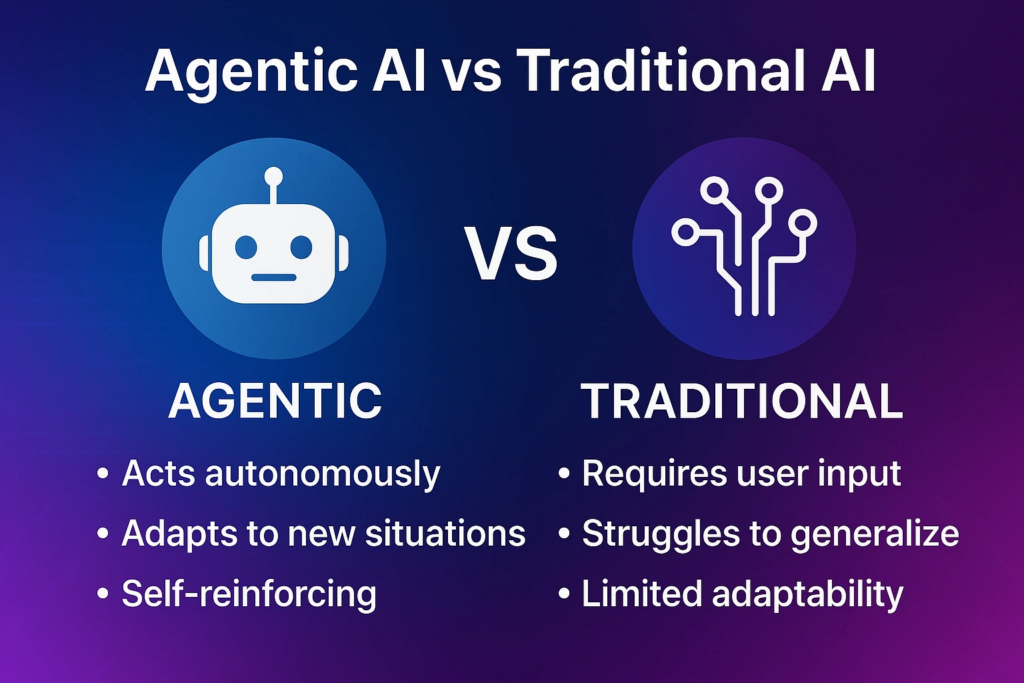
Understanding when to use a simple tool versus an agentic system comes down to how much active involvement the task requires.
| Capability | Traditional Generative AI | Agentic AI Frameworks |
| How You Interact | One prompt in, one answer out | Continuous work toward an overall goal |
| System Power | Read-only; generates text or images | Active; runs code, edits files, makes system changes |
| Adaptability | Fixed response based on its initial training | Adjusts its path in real-time based on live feedback |
| Tool Integration | Lives inside a standalone chat box | Connects directly to APIs, databases, and apps |
| Human Involvement | Human guides every single step | Human sets the goal and steps in for key approvals |
Think of traditional AI as a knowledgeable assistant who gives great advice, while agentic AI acts more like a capable team member who takes projects across the finish line.
Why the Massive Push for Agentic AI in 2026?
The reason businesses are rapidly adopting agentic workflows comes down to the clear limits of older automation tools. Traditional automation software is great at repeating rigid, step-by-step scripts. However, the moment a webpage layout shifts slightly or an unstructured document arrives, those old scripts break down instantly.
Agentic AI fixes this problem by combining adaptable reasoning with direct action. Organizations no longer have to spend months writing brittle code for every edge case. Instead, they can deploy systems that interpret unexpected information, navigate messy human processes, and resolve routine problems independently—saving human teams hundreds of hours of busywork.
Practical Real-World Applications
1. Software Engineering
Coding agents do far more than just autocomplete a line of code. They can clone a code repository, hunt down reported bugs, write unit tests, fix broken functions, and submit fully documented updates for human engineers to review. This shifts developers from repetitive typing into system architecture and high-level strategy.
2. Business Admin and Operations
In administrative environments, agentic tools bridge messy gaps between disconnected software. In procurement, for example, an agent can keep an eye on office inventory, check vendor pricing across dynamic databases, draft purchase orders, and pass complete paperwork to the finance manager for final approval.
3. Intelligent Customer Support

Instead of sending customers canned support articles, agentic systems can handle complete support requests. If a user needs to update a booking due to an emergency, the agent can check internal company policies, confirm availability across third-party scheduling systems, calculate refunds, and update records without needing a human rep unless an exception arises.
4. In-Depth Research and Analysis
For teams buried under information, research agents act as tireless assistants. You can ask an agent to compile a industry trend report; it will systematically comb through market filings, cross-reference news, pull data points into clean comparison tables, and deliver a solid preliminary draft.
5. Marketing and Sales Support
Marketing agents streamline campaign management. They can monitor active ad metrics across multiple channels, run simple tests on ad copy variations, adjust budget caps within approved limits, and build performance summaries for team leads.
6. Personal Productivity
On a personal level, agentic assistants help clean up calendar chaos and digital clutter. Rather than setting simple reminders, an agent can coordinate meeting times across multi-time-zone teams, compile briefing documents ahead of important calls, and clean up low-priority inbox noise automatically.
Core Benefits
When applied thoughtfully, agentic frameworks offer clear advantages:
- Fewer Bottlenecks: Tasks that usually involve endless back-and-forth emails or context-switching between different apps get resolved much faster.
- Smarter Tool Integration: Agents act as dynamic glue between software platforms, cutting down the need for custom, rigid integrations for every tiny task.
- Adaptive Execution: Systems adjust to your specific workflows, preferences, and company guidelines over time.
- Easier Scaling: Organizations can handle sudden spikes in routine workloads without burning out their teams or making frantic temporary hires.
Real Risks and Operational Hazards
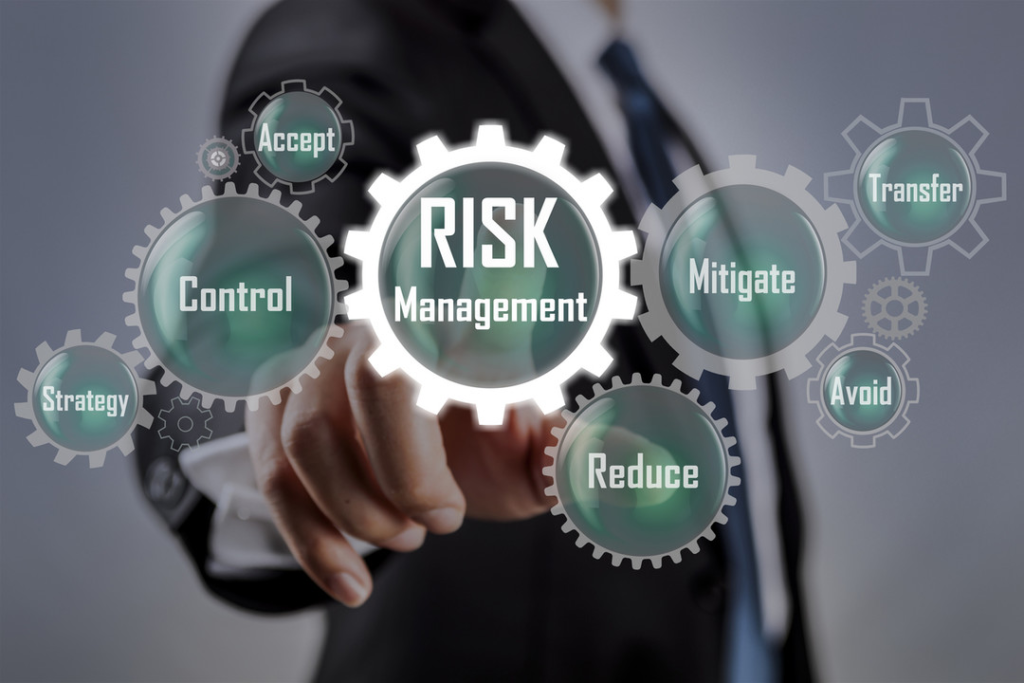
Despite their promise, giving AI systems the power to take action brings genuine risks that cannot be ignored.
Cascading Errors
When an autonomous system operates across multiple steps, a small mistake at step one can snowball rapidly. If an agent misunderstands a database label early on, it might execute hundreds of incorrect automated edits before anyone realizes something went wrong.
Security Threats and Hidden Prompts
Connecting AI to real-world software opens up new security vulnerabilities. In an indirect prompt injection attack, a bad actor hides malicious text inside a public document or email. When the AI agent reads that document while doing research, those hidden instructions can trick the system into leaking internal files or changing settings without permission.
Privacy and Data Access
Agents need broad access to company records, messages, and databases to be useful. If permissions aren’t tightly locked down, an agent processing a routine request might accidentally expose sensitive executive files or customer data to employees who shouldn’t see them.
The Accountability Gap
When an autonomous tool makes a mistake that leads to lost money, a security breach, or corrupted data, you cannot blame the software. Human managers and organizations retain full responsibility for the outcomes of their automated tools.
Keeping Humans in the Loop
To manage these risks, organizations use a Human-in-the-Loop (HITL) framework. Autonomy shouldn’t be an “all-or-nothing” choice; it should depend entirely on the level of risk involved in the task.
Low-Risk ➔ Full Autonomy (Organizing Files, Pulling Reports)
Medium-Risk ➔ Action Staged + Human Review (Sending Customer Emails)
High-Risk ➔ Human Approval Required (Wire Transfers, System Deletions)
Low-Risk (Full Autonomy)
Tasks with zero financial impact, non-destructive file reads, and basic data sorting can run automatically. Examples include pulling public web metrics, organizing internal notes, or drafting initial summaries.
High-Risk (Mandatory Approval)
Actions involving real money, binding legal contracts, sensitive customer health records, or permanent system edits must require explicit human sign-off. The agent gathers the background information, prepares the steps, and presents a clear summary to a human team member, who retains final approval power.
Smart Safety: The Principle of Least Privilege
One of the best ways to protect systems is simply restricting what tools the agent can touch. Security teams apply the Principle of Least Privilege (PoLP):
- Tight API Limits: An agent handling support ticket updates should only have permission to edit ticket statuses—it should never have access to billing databases or user account passwords.
- Temporary Passcodes: Agents should use short-lived access keys that expire automatically once a specific task is complete.
- Clear Audit Trails: Every action, database query, and file change an agent makes must be logged in a clear, unchangeable audit history so teams can review its work at any time.
How Agentic AI Reshapes Cybersecurity

The rise of agentic tools is a double-edged sword for digital security teams:
Better Defensive Speed
Security Operations Centers (SOCs) deploy defensive agents to respond to cyberattacks instantly. When an anomaly pops up, an agent can isolate compromised systems, pull log files, analyze attack paths, and draft security fixes for human engineers in seconds rather than hours.
Smarter Attacks
At the same time, cybercriminals use agentic systems to scale up attacks. Attackers can deploy automated tools that scan corporate networks for vulnerabilities, tweak malicious code on the fly to bypass security software, and craft highly targeted phishing campaigns personalized to specific employees.
What This Means for the Everyday Workplace
The growth of agentic AI isn’t about replacing human workers overnight—it is about changing what our day-to-day jobs actually look like.
As routine, repetitive tasks—like manual data entry, simple scheduling, basic drafting, and first-line ticket routing—become automated, human roles will focus increasingly on higher-level judgment, creative strategy, governance, and empathetic communication.
The most valuable skills in an agentic workplace won’t be how quickly you can complete repetitive digital chores, but how effectively you can direct autonomous systems, review their work critically, and apply human wisdom to complex decisions.
A Simple Roadmap for Businesses Getting Started
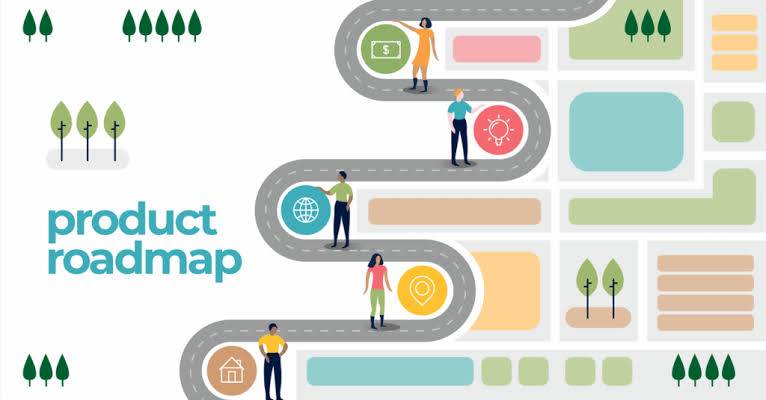
If your business wants to experiment with agentic tools safely, follow this simple, sensible path:
[ Map Workflows ] ➔ [ Define Safety Limits ] ➔ [ Restrict Access ] ➔ [ Test in Sandbox ]
- Start with Simple Workflows: Pick clear, predictable processes that have obvious success metrics and low risk—like gathering research or organizing weekly meeting notes.
- Define Hard Safety Boundaries: Write clear rules about what the tool is allowed to read, what tools it can use, and which actions explicitly require a human approval click.
- Restrict Permissions: Grant the agent the bare minimum software access required to do its job, and nothing more.
- Test Safely First: Run your agentic workflows in a safe test environment before letting them touch live customer data or critical production systems.
- Review the Work Consistently: Schedule regular spot-checks to inspect the agent’s logic, catch errors early, and make sure the system continues to align with your team’s quality standards.
FAQs
1. What is agentic AI?
Agentic AI refers to AI systems that can plan, reason, use tools, and take actions with a degree of autonomy to achieve a goal.
2.How is agentic AI different from generative AI?
Generative AI typically produces content or answers in response to prompts, while agentic AI can plan and execute multi-step tasks, often interacting with external tools or systems.
3. What are the main benefits of agentic AI?
Key benefits include automation, increased productivity, faster workflows, complex problem-solving, and reduced repetitive work.
4.What are the risks of agentic AI?
Major risks include unintended actions, security vulnerabilities, privacy issues, excessive permissions, incorrect decisions, and reduced human oversight.
5.Can agentic AI work without human supervision?
Some systems can operate with limited supervision, but high-impact or sensitive tasks should generally include meaningful human oversight and approval mechanisms.