
Artificial Intelligence (AI) refers to advanced computer systems and algorithmic models engineered to execute complex tasks that historically required human cognition. These operations encompass machine learning from datasets, pattern recognition, natural language understanding, autonomous decision-making, and adaptive problem-solving. Driven by unprecedented breakthroughs in neural networks, large language models, and computer vision, modern AI technology has transitioned from theoretical research into an infinitely scalable, highly accurate infrastructure that powers modern civilization.
Why AI Matters in Everyday Life
The integration of artificial intelligence into consumer technology provides substantial operational efficiencies that fundamentally redefine how individuals manage time, energy, and resources.
- Increases daily productivity: Automates mundane administrative tasks, freeing up cognitive bandwidth for high-value strategic work.
- Accelerates access to information: Synthesizes vast amounts of unstructured data into concise, actionable insights within milliseconds.
- Delivers personalized experiences: Tailors digital interfaces, content feeds, and consumer recommendations to individual behavioral patterns.
- Enhances daily convenience: Seamlessly manages household automation, calendar scheduling, and personal logistics.
- Elevates customer service standards: Operates 24/7 intelligent agents capable of instantly resolving complex user inquiries.
- Strengthens safety and security: Monitors digital networks and physical environments in real time to neutralize cyber threats and physical hazards.
10 Amazing Ways AI Is Transforming Daily Life
1. AI-Powered Virtual Assistants

Modern virtual assistants have evolved from basic voice-command tools into highly context-aware conversational partners. Utilizing advanced natural language processing (NLP), these digital agents comprehend subtle linguistic nuances, manage complex multi-step workflows, and anticipate user needs before explicit commands are given.
Common operational capabilities:
- Automating calendar scheduling and setting context-sensitive reminders
- Drafting and organizing professional communications based on user tone preferences
- Retrieving precise factual data from real-time global databases
- Curating personalized audio playlists tailored to specific daily routines
- Managing interconnected smart home ecosystems through localized voice processing
- Delivering hyper-local weather predictions integrated with travel itineraries
2. Smarter Online Shopping

The global e-commerce landscape leverages predictive machine learning models to deliver deeply tailored retail journeys. By analyzing past purchasing history, active clickstream data, and global consumer trends, merchants display hyper-relevant inventory, drastically shortening the path to purchase.
Core retail AI applications:
- Visual search engines that match real-world photos to product inventories
- Automated supply chain management that optimizes warehouse stocking levels
- Dynamic pricing algorithms that adjust to real-time market supply and demand
- Generative customer support agents that handle returns and product queries instantly
3. Personalized Entertainment

Leading streaming platforms utilize deep learning algorithms to decode individual content consumption habits. Rather than forcing users to manually browse extensive catalogs, recommendation engines analyze viewing duration, genre preferences, time of consumption, and skip rates to curate bespoke home feeds.
4. AI in Healthcare
In modern clinical settings, artificial intelligence serves as an indispensable diagnostic amplifier for medical professionals. By analyzing high-resolution medical imagery, genetic sequences, and patient vitals, diagnostic AI models detect subtle anomalies far earlier than traditional manual screenings allow.
Key healthcare applications:
- Continuous biometric tracking via consumer wearables to flag irregular heart rhythms
- Sleep architecture analysis offering actionable data to improve circadian health
- Predictive disease modeling that forecasts patient deterioration risks in real time
- Automated medication management tools ensuring precise dosage compliance
5. Smarter Education

Educational institutions and online learning platforms deploy adaptive learning algorithms to dismantle the traditional, one-size-fits-all model of schooling. By continually assessing a student’s comprehension speed, strengths, and cognitive gaps, AI tutoring systems dynamically adjust lesson difficulty and format.
Educational technology capabilities:
- Generating custom practice materials tailored to specific learning styles
- Providing real-time feedback on written essays and complex mathematical proofs
- Automating administrative grading tasks so educators can focus on direct mentorship
- Eliminating global language barriers through real-time multi-lingual translation
6. AI in Smart Homes
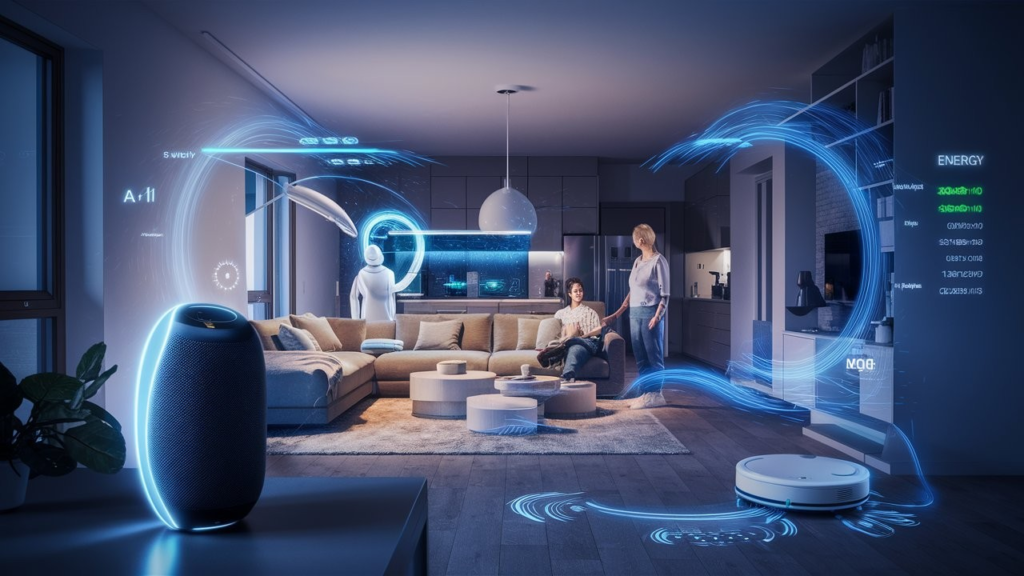
Smart home technology has shifted from passive remote control to autonomous predictive management. Modern IoT devices learn the behavioral schedules, temperature preferences, and security routines of household occupants, automatically adjusting environmental settings to optimize comfort and energy usage.
Popular smart home integrations:
- Intelligent climate control that dynamically lowers power draw during peak utility hours
- Adaptive interior lighting systems that shift color temperature with natural sunlight
- Computer-vision security cameras that distinguish between family pets, delivery drivers, and intruders
- Robotic vacuums that map multi-story floorplans and adapt cleaning intensity per surface type
7. Better Navigation and Travel
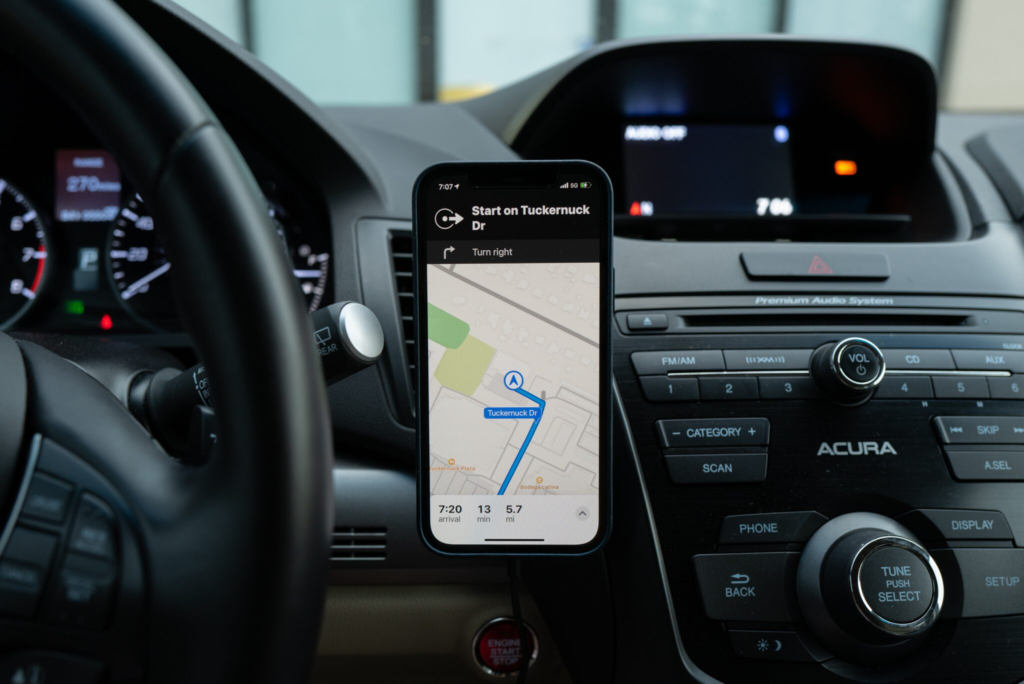
Commuting and long-distance travel rely heavily on spatial AI models that process millions of data points simultaneously. Navigation platforms aggregate real-time GPS signals, road construction feeds, weather hazards, and historical traffic patterns to compute the fastest, most fuel-efficient routes.
Travel optimization features:
- Predictive traffic rerouting that bypasses emerging congestion before it builds
- Accurate travel time forecasting based on historical time-of-day variables
- Fuel and energy optimization tailored specifically to electric vehicle battery ranges
- Localized point-of-interest discovery based on user dietary and lifestyle preferences
8. Improved Workplace Productivity

In corporate environments, generative AI tools act as force multipliers for human intellect. By automating administrative overhead—such as transcribing meetings, summarizing extensive report threads, and writing baseline code—workers spend significantly more time on creative problem-solving and strategic planning.
Workplace integration examples:
- Automated meeting synthesis that extracts key action items and owner assignments
- Intelligent inbox management that categorizes communications by urgency
- Drafting complex documentation, software code, and marketing copy in seconds
- Advanced data visualization tools that turn raw spreadsheets into executive insights
9. Enhanced Financial Management

Financial institutions employ machine learning systems to safeguard customer assets and streamline personal wealth management. By continuously scanning global transaction networks, fraud detection models identify suspicious account activities instantly, preventing financial crime before transactions settle.
Financial AI tools assist with:
- Automated cash-flow tracking that categorizes spending habits automatically
- Algorithmic wealth management providing low-cost, diversified portfolio rebalancing
- Real-time credit risk assessment accelerating loan processing timelines
- Personalized budgeting tools that project future savings based on recurring bills
10. Stronger Cybersecurity

As digital infrastructure expands, AI-driven cybersecurity frameworks represent the primary line of defense against sophisticated cyberattacks. Unlike static firewall rules, adaptive security algorithms establish baselines of normal network behavior and instantly flag subtle anomalies that indicate zero-day threats or phishing attempts.
Modern cyber defense mechanisms:
- Automated malware containment that isolates compromised network nodes in milliseconds
- Behavioral biometric authentication preventing unauthorized account takeovers
- Predictive threat intelligence that patches software vulnerabilities proactively
- Real-time email filtering capable of detecting advanced social engineering tactics
Benefits of AI in Daily Life
| Impact Category | Operational Mechanism | Primary Outcome |
| Time Efficiency | Automates repetitive administrative and household tasks | Recovers hours of daily personal time for users |
| Personalized Living | Adapts software interfaces to individual behavioral data | Eliminates digital clutter and decision fatigue |
| Healthcare Quality | Monitors biometric trends and assists clinical diagnostics | Enables proactive, preventive wellness management |
| Economic Savings | Optimizes energy usage and financial portfolio allocation | Reduces utility bills and improves after-tax returns |
| Safety & Security | Scans digital networks and physical property continuously | Minimizes exposure to cyber fraud and physical threats |
Challenges and Ethical Considerations

While the advantages of artificial intelligence are profound, its rapid integration into society introduces significant challenges that require careful stewardship:
- Data Privacy Risks: The collection of vast personal datasets creates vulnerabilities if data security standards fail.
- Algorithmic Bias: Machine learning models trained on flawed historical data can perpetuate systemic social biases.
- Workforce Disruption: Rapid automation requires continuous workforce reskilling as traditional roles evolve.
- Technological Over-reliance: Excessive dependence on automated systems can diminish critical human analytical skills.
- Intellectual Property Uncertainty: Generative models raise ongoing legal questions regarding content ownership and sourcing.
Addressing these concerns requires robust regulatory oversight, transparent algorithmic auditing, and an unwavering commitment to ethical AI development.
FAQs
1. What is AI in daily life?
AI refers to smart technology that helps automate everyday tasks and improve convenience.
2. How is AI used every day?
AI is used in smartphones, virtual assistants, navigation apps, online shopping, and smart home devices.
3. What are the benefits of AI?
AI saves time, boosts productivity, personalizes experiences, and improves decision-making.
4. Is AI safe to use?
Yes, when used responsibly with proper privacy and security measures.
5. Can AI improve healthcare?
Yes. AI helps with disease detection, patient monitoring, and personalized treatment plans.