
Artificial Intelligence (AI) is one of the most transformative technologies of the 21st century. From virtual assistants and recommendation systems to self-driving vehicles and advanced healthcare solutions, AI is changing the way people live and work. In 2026, AI is no longer limited to large technology companies—it is now used by businesses, educators, healthcare providers, governments, and individuals worldwide.
For beginners, AI may seem complex, but its core concepts are easier to understand than many people think. By learning the fundamentals of AI, you can better understand how intelligent systems work, why they are important, and how they are shaping the future.
This guide covers the basics of AI, its key concepts, types, applications, benefits, challenges, and future trends in a simple and beginner-friendly way.
What Is Artificial Intelligence?
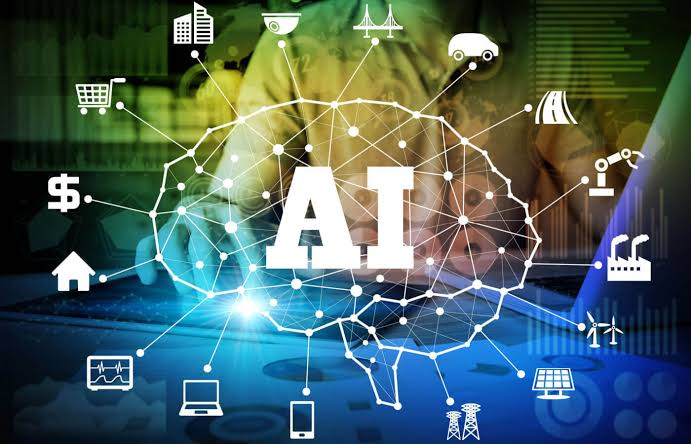
Artificial Intelligence (AI) is the ability of computer systems to perform tasks that normally require human intelligence. These tasks include learning from data, recognizing patterns, solving problems, understanding language, making decisions, and improving performance over time.
Unlike traditional software that follows fixed instructions, AI systems can analyze information, identify trends, and adapt based on experience or new data.
Today, AI powers many everyday technologies, including voice assistants, chatbots, navigation apps, online shopping recommendations, language translation, and smart home devices.
Why AI Matters
AI has become an essential part of modern life because it helps solve complex problems, automate repetitive tasks, and improve efficiency across industries.
Some major advantages of AI include:
- Automates repetitive work
- Improves decision-making through data analysis
- Enhances customer experiences
- Reduces human errors
- Increases productivity
- Supports innovation
- Saves time and operational costs
As AI continues to evolve, its influence on business, education, healthcare, transportation, and entertainment will continue to grow.
How Artificial Intelligence Works
AI systems follow a series of steps to process information and make predictions or decisions.
Data Collection
AI begins with collecting large amounts of data from different sources. The quality of data directly affects the performance of an AI model.
Data Processing
The collected data is cleaned, organized, and prepared for analysis.
Learning
Using algorithms, AI identifies patterns within the data. This learning process enables the system to improve its accuracy over time.
Decision Making
Once trained, the AI system applies what it has learned to make predictions, answer questions, recognize images, or recommend solutions.
Continuous Improvement
Many AI systems continue learning from new data, allowing them to become more accurate and effective over time.
Types of Artificial Intelligence
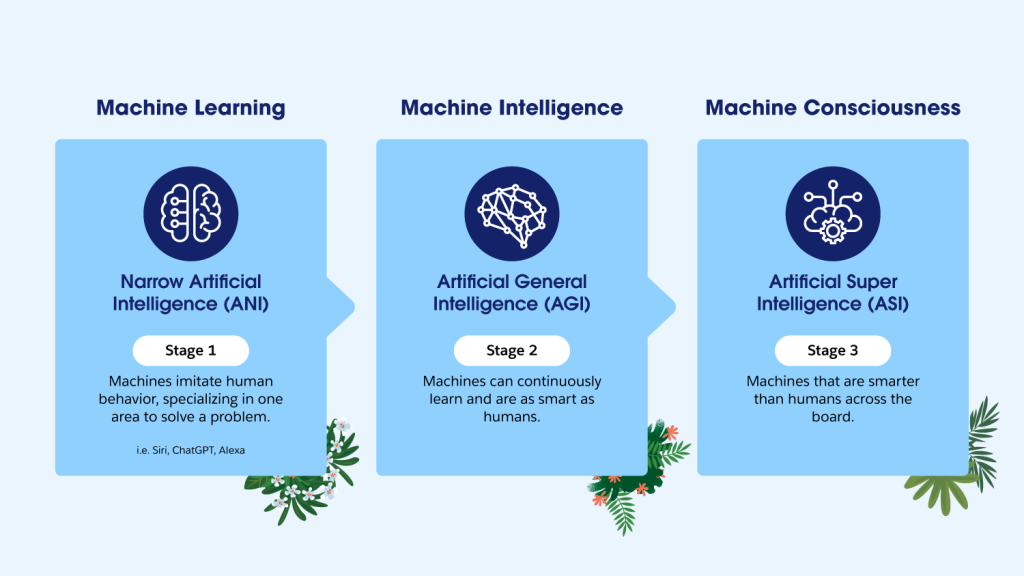
AI is commonly divided into different categories based on its capabilities.
Narrow AI
Also called Weak AI, Narrow AI is designed to perform specific tasks. Examples include voice assistants, recommendation engines, spam filters, and facial recognition systems.
General AI
General AI refers to machines capable of performing any intellectual task that humans can do. This type of AI remains a research goal and has not yet been achieved.
Super AI
Super AI is a hypothetical concept where machines surpass human intelligence in every area, including creativity, reasoning, and decision-making. It is currently theoretical.
Key AI Technologies
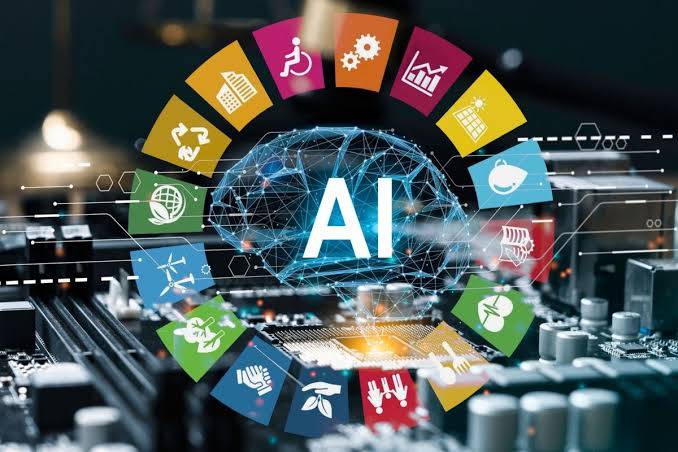
Several technologies work together to make AI systems intelligent.
Machine Learning (ML)
Machine Learning enables computers to learn from data without being explicitly programmed. It is one of the most widely used branches of AI.
Deep Learning
Deep Learning uses artificial neural networks with multiple layers to process complex information such as images, speech, and video.
Natural Language Processing (NLP)
NLP allows computers to understand, interpret, and generate human language. It powers chatbots, virtual assistants, language translation, and text analysis tools.
Computer Vision
Computer Vision enables machines to recognize and interpret visual information from images and videos.
Robotics
AI-powered robots perform physical tasks in industries such as manufacturing, healthcare, logistics, and agriculture.
Real-World Applications of AI

AI is transforming nearly every industry.
Healthcare
AI helps doctors detect diseases, analyze medical images, support diagnoses, and personalize treatment plans.
Education
Educational platforms use AI to personalize learning experiences, automate grading, and provide intelligent tutoring.
Business
Companies use AI for customer service, marketing automation, demand forecasting, fraud detection, and business analytics.
Finance
Banks and financial institutions rely on AI for fraud prevention, credit scoring, investment analysis, and customer support.
Retail
Retailers use AI to recommend products, optimize inventory, predict customer behavior, and improve shopping experiences.
Transportation
AI supports route optimization, traffic management, autonomous vehicles, and predictive maintenance.
Entertainment
Streaming services recommend movies, music, and shows based on user preferences using AI algorithms.
Benefits of AI

Artificial Intelligence offers numerous advantages.
Some major benefits include:
- Increased efficiency
- Faster decision-making
- Improved customer service
- Better data analysis
- Reduced operational costs
- Higher productivity
- Personalized user experiences
- Enhanced business innovation
Organizations that adopt AI effectively often gain a competitive advantage.
AI Trends in 2026
Artificial Intelligence continues to evolve rapidly.
Major trends include:
- Generative AI for content creation
- AI-powered business automation
- Personalized healthcare solutions
- AI assistants for productivity
- Responsible and ethical AI
- Edge AI for faster processing
- AI in cybersecurity
- AI-driven education platforms
These innovations are making AI more accessible for businesses and individuals.
How Beginners Can Start Learning AI

If you are new to AI, start with the fundamentals before exploring advanced topics.
Helpful steps include:
- Learn basic programming concepts
- Understand data and statistics
- Study Machine Learning fundamentals
- Practice with beginner-friendly AI tools
- Explore real-world AI applications
- Build small AI projects
- Stay updated with industry developments
Consistent practice and curiosity are the keys to mastering AI over time.
The Future of Artificial Intelligence
The future of AI is filled with exciting possibilities. As technology advances, AI will become more capable, efficient, and integrated into everyday life. Businesses will automate more processes, healthcare systems will become smarter, education will become increasingly personalized, and scientific research will accelerate through AI-powered discoveries.
At the same time, governments, researchers, and technology companies will continue working to ensure AI is developed responsibly, ethically, and securely.
FAQs
What are AI fundamentals?
AI fundamentals are the basic concepts of Artificial Intelligence, including how AI works, machine learning, deep learning, natural language processing (NLP), computer vision, and real-world AI applications.
What is Artificial Intelligence (AI)?
Artificial Intelligence (AI) is a branch of computer science that enables machines to perform tasks that typically require human intelligence, such as learning, problem-solving, decision-making, and language understanding.
What are the main types of AI?
The three main types of AI are:
Super AI: A theoretical form of AI that would surpass human intelligence.
Narrow AI (Weak AI): Designed for specific tasks.
General AI (Strong AI): Aims to perform any intellectual task a human can do (still under development).
What is the difference between AI and Machine Learning?
AI is the broader field of creating intelligent machines, while Machine Learning (ML) is a subset of AI that allows computers to learn from data and improve their performance without explicit programming.
Where is AI used in everyday life?
AI is used in voice assistants, chatbots, recommendation systems, online shopping, navigation apps, healthcare, banking, education, smart home devices, and social media platforms.