
Artificial Intelligence (AI) is one of the most transformative technologies of the modern era. From voice assistants and recommendation systems to self-driving cars and advanced business automation, AI is rapidly changing the way people live and work. As organizations continue adopting AI-powered solutions, understanding the fundamentals of artificial intelligence has become increasingly important for students, professionals, and business leaders alike.
AI is no longer limited to technology companies or research laboratories. It is now a part of everyday life, influencing industries such as healthcare, education, finance, marketing, retail, and manufacturing. Learning the basics of AI provides a strong foundation for understanding how modern technologies work and how they will shape the future.
What Is Artificial Intelligence?
Artificial Intelligence refers to the ability of machines and computer systems to perform tasks that typically require human intelligence. These tasks may include learning, problem-solving, decision-making, understanding language, recognizing images, and identifying patterns.
Unlike traditional software that follows predefined instructions, AI systems can analyze data, learn from experience, and improve their performance over time. This capability allows AI to adapt to new situations and solve complex problems more effectively.
Why Artificial Intelligence Matters

AI is becoming a driving force behind innovation and digital transformation. Businesses use AI to improve efficiency, automate repetitive tasks, analyze large volumes of data, and deliver better customer experiences. Individuals benefit from AI through smart assistants, personalized recommendations, navigation systems, and many other everyday applications.
As AI continues to evolve, its impact on industries and society is expected to grow significantly. Understanding AI fundamentals helps people stay informed about technological advancements and prepare for future opportunities.
The History of Artificial Intelligence
The concept of artificial intelligence has existed for decades. Early researchers explored the possibility of creating machines capable of mimicking human thinking and decision-making. Over time, advancements in computing power, data availability, and machine learning algorithms accelerated AI development.
Today, AI technologies are far more sophisticated than their early predecessors. Modern AI systems can process enormous amounts of information, recognize complex patterns, and perform tasks that were once considered impossible for machines.
Types of Artificial Intelligence
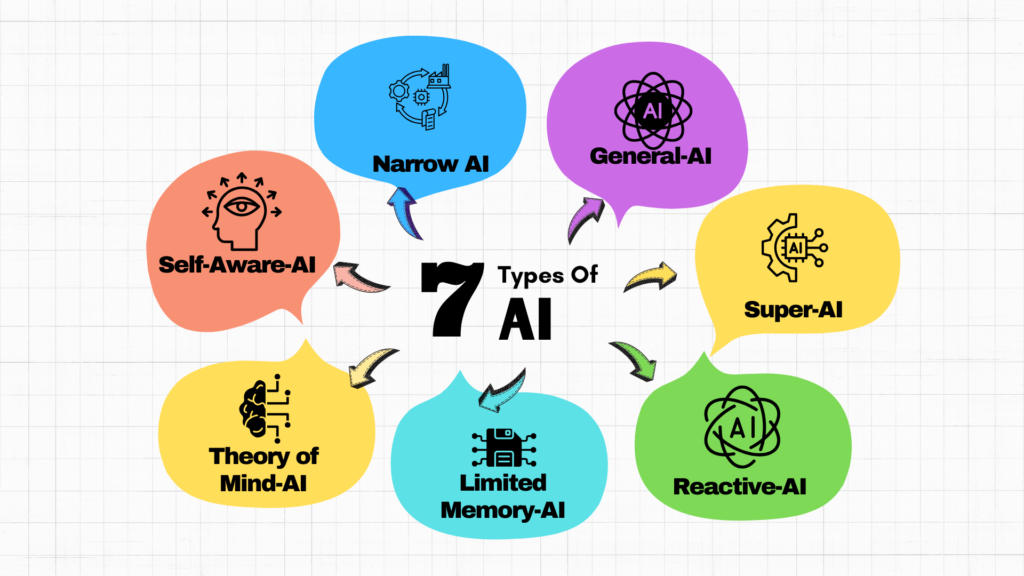
Artificial intelligence can be categorized into different types based on its capabilities.
Narrow AI is designed to perform specific tasks and is the most common form of AI today. Examples include virtual assistants, recommendation engines, and image recognition systems.
General AI refers to a theoretical form of AI capable of performing any intellectual task that a human can do. While researchers continue working toward this goal, General AI does not yet exist.
Super AI is a hypothetical future stage where machines surpass human intelligence in all areas. This concept remains largely theoretical and is often discussed in research and future technology scenarios.
How AI Works
AI systems function by processing data and identifying patterns within that information. Through advanced algorithms, AI can learn from examples, make predictions, and improve performance over time.
The process typically involves collecting data, training models, testing performance, and continuously refining outputs. As AI systems receive more data, they become better at recognizing patterns and generating accurate results.
This ability to learn and adapt is what differentiates AI from traditional software systems.
Understanding Machine Learning
Machine Learning is one of the most important branches of artificial intelligence. It enables computers to learn from data without being explicitly programmed for every task.
Machine learning algorithms analyze data, identify relationships, and make predictions based on learned patterns. Applications include fraud detection, recommendation systems, medical diagnostics, and predictive analytics.
Machine learning has become a cornerstone of modern AI because it allows systems to improve automatically through experience.
What Is Deep Learning?
Deep Learning is a specialized area of machine learning that uses artificial neural networks inspired by the human brain. These networks consist of multiple layers that process information and recognize complex patterns.
Deep learning powers many advanced AI applications, including image recognition, speech processing, language translation, and autonomous vehicles. Its ability to handle large amounts of data has significantly expanded the capabilities of artificial intelligence.
Natural Language Processing (NLP)

Natural Language Processing, commonly known as NLP, focuses on enabling computers to understand and generate human language. NLP combines artificial intelligence, linguistics, and machine learning to process text and speech.
Applications of NLP include chatbots, virtual assistants, language translation tools, sentiment analysis, and content generation platforms. As NLP technology advances, interactions between humans and machines are becoming more natural and effective.
Computer Vision
Computer Vision is another important field within AI that allows machines to interpret and analyze visual information. Through computer vision, AI systems can recognize objects, detect faces, analyze images, and understand video content.
Industries such as healthcare, manufacturing, security, and retail use computer vision to improve operations and enhance decision-making. This technology continues to expand as image recognition capabilities become more sophisticated.
Common Applications of AI
Artificial intelligence is used across numerous industries and everyday applications. In healthcare, AI helps diagnose diseases and analyze medical data. In finance, it supports fraud detection and risk assessment. In retail, AI improves customer experiences through personalized recommendations.
Businesses use AI for automation, customer support, marketing optimization, and data analysis. Consumers encounter AI through voice assistants, smart devices, navigation systems, and social media platforms. These applications demonstrate how deeply AI has become integrated into modern life.
Benefits of Artificial Intelligence
Increased Productivity – AI automates repetitive tasks, allowing employees to focus on more important and strategic work.
Improved Efficiency – AI systems can process large amounts of data quickly and accurately, reducing the time needed to complete tasks.
Better Decision-Making – AI analyzes data and provides valuable insights that support informed business decisions.
Cost Reduction – Automation helps reduce operational expenses by minimizing manual work and improving resource utilization.
Challenges and Limitations of AI
Despite its many benefits, AI also presents challenges and limitations. AI systems rely heavily on data quality, and inaccurate data can lead to poor outcomes. Privacy concerns, security risks, and potential biases in algorithms are additional challenges that organizations must address.
There are also concerns about the impact of automation on employment and the ethical implications of advanced AI technologies. Responsible AI development and governance are essential for ensuring positive outcomes.
The Future of Artificial Intelligence

The future of AI is filled with exciting possibilities. Researchers continue developing more advanced systems capable of solving complex problems, improving automation, and enhancing human productivity.
Emerging technologies such as generative AI, advanced robotics, autonomous systems, and intelligent assistants are expected to drive the next wave of innovation. As AI becomes more sophisticated, its influence on business, education, healthcare, and everyday life will continue to grow.
Conclusion
Artificial Intelligence is transforming the world at an unprecedented pace. Understanding AI fundamentals provides valuable knowledge about how intelligent systems work and how they are reshaping industries and society. From machine learning and deep learning to natural language processing and computer vision, AI technologies are creating new opportunities for innovation and growth.
As AI adoption continues to expand, building a strong foundation in artificial intelligence fundamentals will help individuals and organizations stay informed, adapt to technological change, and prepare for the future.
FAQs
What is Artificial Intelligence?
Artificial Intelligence is technology that enables machines to perform tasks that typically require human intelligence.
Why is AI important?
AI improves efficiency, automates tasks, enhances decision-making, and drives innovation across industries.
What is Machine Learning?
Machine Learning is a branch of AI that allows systems to learn from data and improve without explicit programming.