
Artificial Intelligence (AI) has become a part of everyday life. Whether you’re using a smartphone, streaming movies, shopping online, or asking a virtual assistant a question, AI is working behind the scenes. A few years ago, AI seemed like something only researchers and tech companies talked about. Today, it’s a skill that students, professionals, business owners, and creators are exploring.
The good news is that learning AI doesn’t require a computer science degree. Like any other skill, it starts with understanding the basics and gradually building your knowledge over time.
What Exactly Is Artificial Intelligence?

In simple terms, Artificial Intelligence refers to machines or software that can perform tasks that usually require human intelligence. These tasks might include recognizing images, understanding language, making recommendations, or solving problems.
Think about the last time Netflix suggested a show you ended up enjoying. Or when Google Maps found the fastest route to your destination. These are everyday examples of AI in action.
AI isn’t about robots taking over the world. Most of the AI we interact with today is designed to make daily tasks easier, faster, and more personalized.
Why Are So Many People Learning AI?

The growing interest in AI isn’t just a trend. Companies across industries are using AI to improve efficiency, automate repetitive work, and make better decisions.
Some common reasons people start learning AI include:
- Exploring new career opportunities
- Improving productivity at work
- Understanding emerging technologies
- Building innovative projects
- Staying competitive in the job market
Even if you don’t plan to become an AI engineer, understanding the basics can be valuable in today’s digital world.
Starting Your AI Journey
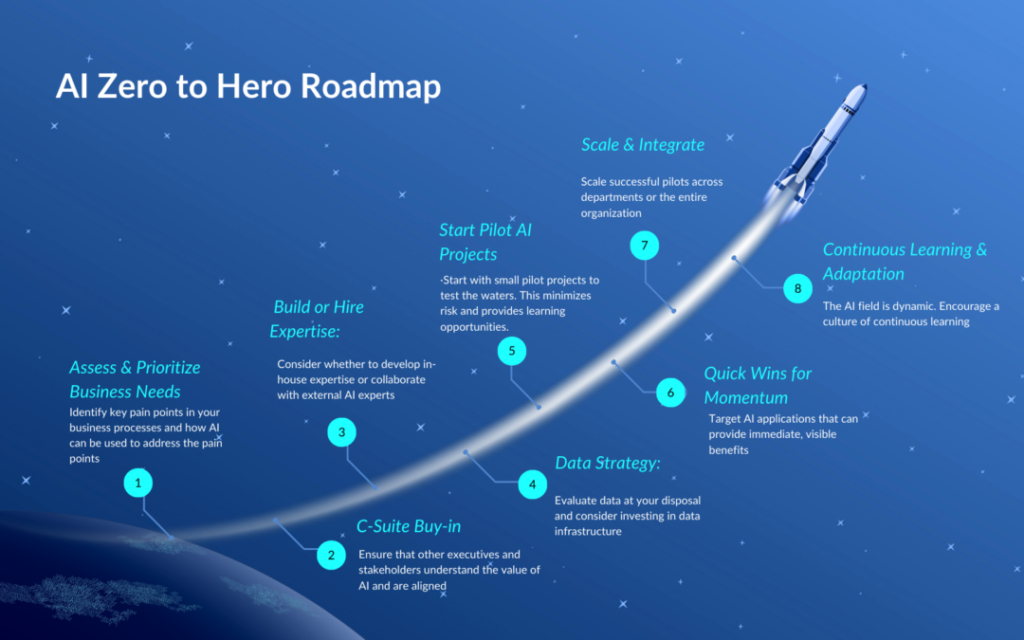
Many beginners feel overwhelmed when they first hear terms like machine learning, neural networks, and deep learning. That’s completely normal.
Instead of trying to learn everything at once, focus on building a strong foundation.
Start by understanding:
- What AI is
- How machines learn from data
- Common AI applications
- Basic programming concepts
- Ethical considerations of AI
Learning these fundamentals makes advanced topics much easier to understand later.
Do You Need Programming Skills?

This is one of the most common questions beginners ask.
The answer depends on your goals.
If you simply want to understand AI and use AI-powered tools, you can get started without coding. Many modern platforms allow users to interact with AI through simple interfaces.
However, if your goal is to build AI models or develop intelligent applications, learning programming becomes important.
Python is often recommended because it is beginner-friendly and widely used in AI development.
Understanding Machine Learning

Machine Learning is a major branch of AI. It allows systems to learn patterns from data instead of relying entirely on fixed instructions.
Imagine teaching a child to recognize cats. Rather than memorizing every cat in the world, the child learns common characteristics such as ears, eyes, and fur.
Machine learning works in a similar way. The system studies examples and gradually learns to identify patterns.
This technology powers many tools we use daily, including:
- Email spam filters
- Recommendation systems
- Voice assistants
- Fraud detection systems
- Search engines
Once you understand machine learning, many AI concepts begin to make more sense.
Learning Through Real Projects
Reading about AI is helpful, but practical experience creates deeper understanding.
Start with simple projects such as:
| Project Idea | What You’ll Learn |
|---|---|
| Chatbot | Natural language processing basics |
| Movie Recommendation System | Data analysis and predictions |
| Image Recognition Tool | Computer vision concepts |
| Sentiment Analysis | Text classification techniques |
| AI Content Assistant | Generative AI applications |
These projects don’t have to be perfect. The goal is to gain hands-on experience and learn by doing.
Common Challenges Beginners Face
Every learner encounters obstacles along the way.
Some of the most common challenges include:
Information Overload
There are thousands of tutorials, courses, and videos available online. Trying to consume everything can lead to confusion.
Focus on one learning path at a time.
Technical Terminology
Words like algorithms, datasets, neural networks, and supervised learning may sound intimidating at first.
Don’t worry if you don’t understand everything immediately. Familiarity develops naturally with practice.
Lack of Confidence
Many people assume AI is only for programmers or mathematicians.
In reality, successful AI learners come from diverse backgrounds, including marketing, design, healthcare, finance, and education.
Creating a Practical Learning Plan

A structured approach often works better than jumping between random tutorials.
Month 1: Learn the Basics
- Understand AI fundamentals
- Explore real-world applications
- Learn basic Python concepts
- Read beginner-friendly resources
Month 2: Explore Machine Learning
- Study core machine learning concepts
- Learn about datasets
- Practice simple models
- Work on small exercises
Month 3: Build Projects
- Create beginner-level AI projects
- Experiment with AI tools
- Improve problem-solving skills
- Document your progress
Consistency matters more than speed. Even one hour of focused learning each day can produce significant results over time.
The Importance of Staying Curious

AI evolves rapidly. New tools, techniques, and applications appear almost every month.
Rather than trying to learn everything, develop the habit of continuous learning.
Follow industry updates, read articles, watch tutorials, and experiment with new tools whenever possible.
Curiosity often becomes one of the most valuable skills in technology.
Moving from Beginner to Expert
Becoming proficient in AI doesn’t happen overnight. Every expert started as a beginner who knew very little about the subject.
The difference is that they kept learning, practicing, and improving.
As your knowledge grows, you’ll begin to understand more advanced topics such as:
- Deep Learning
- Neural Networks
- Natural Language Processing (NLP)
- Computer Vision
- Generative AI
- Reinforcement Learning
Each step builds upon the previous one.
FAQs
1. What is Artificial Intelligence (AI)?
Artificial Intelligence (AI) is technology that enables computers and machines to perform tasks that typically require human intelligence, such as learning, problem-solving, and decision-making.
2. Can I learn AI without a technical background?
Yes. Many beginners start learning AI without prior programming or technical experience. Understanding the basics and gradually building skills is often the best approach.
3. Which programming language is best for AI?
Python is the most popular programming language for AI because it is easy to learn and has a wide range of AI and machine learning libraries.