
Software development is evolving rapidly, and developers are constantly looking for ways to work faster without sacrificing quality. Whether you’re building a website, developing a mobile app, or maintaining enterprise software, writing clean and efficient code takes time and effort. This is where AI-powered coding tools are making a significant impact on the industry.
Over the past few years, Artificial Intelligence has moved beyond simple automation and become a valuable assistant for developers. Modern AI coding tools can suggest code, identify bugs, generate documentation, and even help solve programming challenges in real time. Instead of replacing developers, these tools act as intelligent assistants that help programmers focus on creativity and problem-solving while reducing repetitive work.
What Are AI-Powered Coding Tools?
AI-powered coding tools are software applications that use Artificial Intelligence and machine learning to assist developers throughout the coding process. These tools analyze code patterns, understand programming languages, and provide suggestions that help improve efficiency and accuracy.
Think of them as a smart coding partner sitting beside you. As you write code, the AI can predict what you’re trying to build, recommend the next line of code, and highlight potential errors before they become bigger problems.
These tools work with popular programming languages such as Python, JavaScript, Java, C++, PHP, and many others, making them useful for developers across different industries.
Why Developers Are Adopting AI Coding Tools
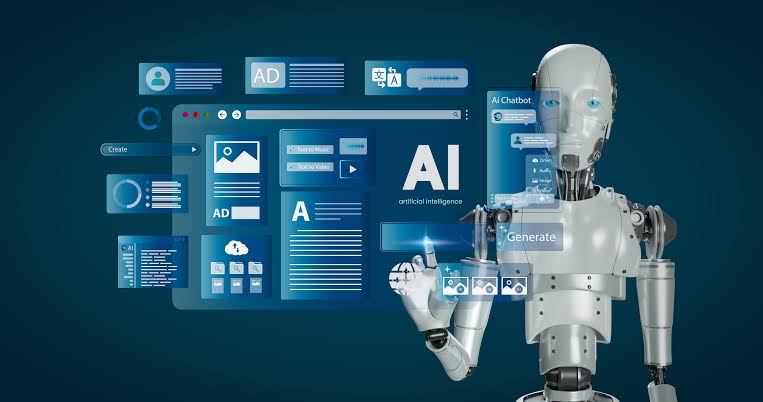
One of the biggest challenges developers face is managing large amounts of code while maintaining quality and meeting deadlines. Writing every line manually can be time-consuming, especially when dealing with repetitive tasks.
AI coding assistants help reduce this workload by automating common coding activities. Developers can spend less time searching for syntax solutions or debugging basic errors and more time focusing on application logic and innovation.
Another reason for their growing popularity is the increasing complexity of software projects. Modern applications often involve multiple technologies, frameworks, and integrations. AI tools provide valuable support by offering suggestions and helping developers navigate unfamiliar technologies more confidently.
Faster Code Writing and Development
Perhaps the most obvious benefit of AI-powered coding tools is speed. These platforms can generate code suggestions in real time, helping developers complete tasks much faster than traditional coding methods.
For example, instead of manually writing repetitive functions or boilerplate code, developers can accept AI-generated recommendations and continue building their applications. This significantly reduces development time and allows teams to deliver projects more quickly.
Faster coding doesn’t just benefit individual developers. Entire organizations can improve productivity, reduce project timelines, and accelerate software releases.
Improved Code Quality

Writing code quickly is important, but writing quality code is even more critical. Poorly written code can lead to bugs, security vulnerabilities, and performance issues that become expensive to fix later.
AI coding tools help maintain high coding standards by identifying potential mistakes while developers are still writing code. They can recommend cleaner syntax, suggest best practices, and highlight inefficient code structures.
By providing immediate feedback, these tools encourage developers to write more maintainable and reliable software from the start.
Better Bug Detection and Debugging
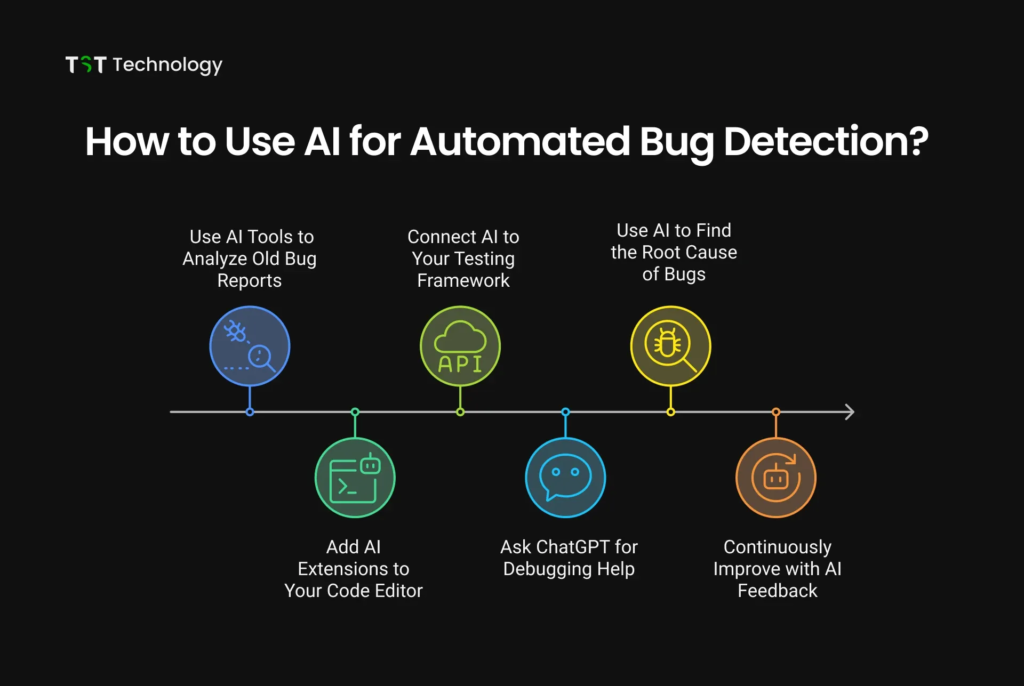
Debugging is often one of the most time-consuming aspects of software development. Finding the source of an error can sometimes take longer than writing the actual code.
AI-powered coding assistants help simplify this process by automatically identifying potential bugs and offering suggestions for fixing them. Some advanced tools can analyze error messages, review code context, and recommend solutions based on similar issues encountered by other developers.
This proactive approach helps teams reduce downtime and resolve problems much faster.
Helping New Developers Learn Faster

AI coding tools are not only useful for experienced programmers. They also provide tremendous value for beginners who are still learning programming concepts.
When new developers encounter unfamiliar syntax or coding patterns, AI assistants can offer guidance and explanations. Instead of spending hours searching through documentation, learners can receive immediate support directly within their development environment.
This creates a more interactive learning experience and helps aspiring developers build confidence more quickly.
Automating Repetitive Tasks

Software development often involves repetitive activities such as generating templates, creating test cases, writing documentation, and formatting code. While these tasks are important, they don’t always require a developer’s full attention.
AI tools can automate many of these routine responsibilities, freeing developers to focus on more meaningful work. By reducing repetitive tasks, teams can increase efficiency and spend more time solving complex business problems.
Automation also helps maintain consistency across projects, ensuring coding standards are followed throughout the development process.
Enhancing Team Collaboration
Modern software development is rarely a solo effort. Most projects involve collaboration between developers, designers, testers, and project managers.
AI-powered coding tools help improve collaboration by generating clear documentation, suggesting standardized coding practices, and identifying inconsistencies across codebases. This makes it easier for team members to understand each other’s work and contribute effectively.
When everyone follows similar coding standards and documentation practices, projects become easier to maintain and scale over time.
Popular AI Coding Tools in 2026
Several AI-powered coding assistants have become essential tools for developers worldwide.
- GitHub Copilot: GitHub Copilot is one of the most widely used AI coding assistants. It provides real-time code suggestions, generates functions, and helps developers write code more efficiently.
- Amazon CodeWhisperer: Amazon CodeWhisperer offers AI-driven coding recommendations and helps developers build applications faster while following security best practices.
- Tabnine: Tabnine focuses on intelligent code completion and supports multiple programming languages. It helps developers write code faster while maintaining accuracy.
- Replit AI: Replit AI assists developers directly within the browser-based development environment, making coding and collaboration more accessible.
- Cursor AI: Cursor AI has gained popularity among developers for its ability to understand code context, answer programming questions, and assist with debugging tasks.
Challenges of AI Coding Tools
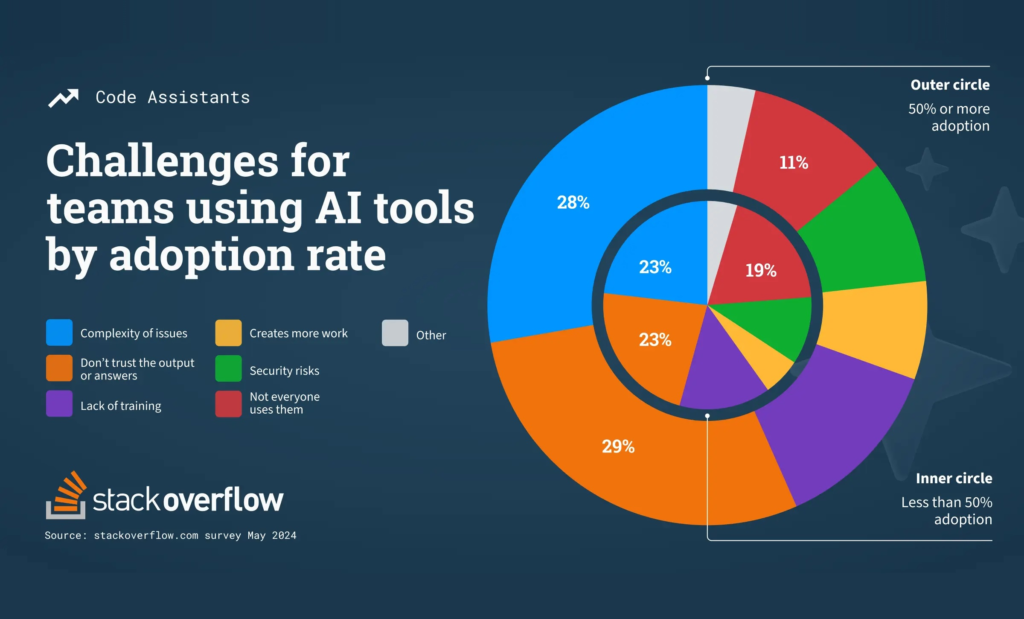
While AI-powered coding tools offer many benefits, they are not perfect. Developers should remember that AI-generated code may occasionally contain errors or security vulnerabilities.
It is important to review and test all AI-generated suggestions before implementing them in production environments. Human oversight remains essential to ensure software quality and reliability.
Additionally, AI tools may not fully understand business requirements or project-specific goals. Developers must continue using their expertise and judgment when making technical decisions.
The Future of AI in Software Development
The role of Artificial Intelligence in software development is expected to grow significantly in the coming years. Future AI tools may provide deeper project understanding, more advanced debugging capabilities, and even greater automation of development workflows.
Rather than replacing developers, AI is likely to become an increasingly valuable partner that enhances productivity and supports innovation. Developers who learn how to effectively use AI-powered coding tools will be better positioned to adapt to changing industry demands and deliver higher-quality software.
Deep Dive: The Mechanics of AI Code Generation
To fully appreciate the impact of these tools, it is crucial to understand how Large Language Models (LLMs) operate under the hood. These assistants are trained on vast repositories of open-source code, mastering syntax, design patterns, and programming logic across multiple languages. When a developer types a prompt or starts writing a function, the AI processes the surrounding code as contextual tokens, calculating the most statistically probable next lines of code. This architecture allows the AI to offer context-aware autocompletion rather than basic, static text generation.
Furthermore, many modern utilities utilize Retrieval-Augmented Generation (RAG) systems. This technique allows the AI to securely index an organization’s internal codebase. By doing so, the assistant can suggest internal libraries, abide by proprietary architectural frameworks, and reuse existing internal components without exposing sensitive corporate assets to external training sets.
Optimizing Technical Workflows and Pipelines

The incorporation of artificial intelligence goes far beyond the local text editor. Advanced engineering teams are integrating these models directly into their Continuous Integration and Continuous Deployment (CI/CD) pipelines. When a programmer submits a pull request, an automated AI agent can immediately review the changes, perform a static application security testing (SAST) pass, and flag structural deficiencies before a human reviewer even opens the file.
[Developer Writes Code]
          │
          ▼
[AI Editor Extension] ──► (Real-time Syntax & Logic Suggestions)
          │
          ▼
[Git Pull Request]
          │
          ▼
[CI/CD Pipeline System] ──► (Automated Security & Performance Audits)
          │
          ▼
[Production Deployment]
This integration dramatically reduces code review friction. Instead of senior engineers spending hours identifying missing error handlers, trailing whitespace, or suboptimal algorithmic complexity, the AI handles the initial verification. This optimizes the human review process, allowing senior talent to evaluate high-level architecture and business logic alignment instead of syntax minutiae.
Security, Intellectual Property, and Ethical Risks

Despite the undeniable gains in output speed, widespread adoption introduces serious legal and structural hazards. One primary concern is intellectual property contamination. Because these models are trained on public repositories, they can occasionally generate code blocks that closely mimic copyrighted software or run afoul of restrictive open-source licenses, such as the GNU General Public License (GPL). Organizations must deploy strict license compliance scanners to ensure generated artifacts do not invite legal liability.
| Risk Category | Primary Concern | Mitigation Strategy |
| Intellectual Property | Accidental replication of GPL or copyrighted code structures. | Implement real-time license compliance scanners. |
| Data Privacy | Leaking sensitive corporate logic or API keys to public models. | Utilize enterprise accounts with strict zero-data-retention policies. |
| Security Vulnerabilities | Outdated or insecure syntax patterns generated by the AI. | Mandatory human oversight and automated SAST testing pipelines. |
From a cybersecurity standpoint, AI engines do not naturally understand security implications; they understand patterns. If the training data contains legacy code utilizing deprecated, vulnerable cryptographic libraries or patterns susceptible to SQL injection vulnerabilities, the AI will confidently suggest those bad habits. Consequently, security engineers emphasize that code generation tools must never be treated as authoritative. They require strict sandbox validation and comprehensive unit testing prior to any production deployment.
Maximizing Efficiency: Prompt Engineering for Developers
To extract the highest value from an artificial assistant, software engineers must master the art of semantic prompting. Simply asking an AI to “write a database connection script” often results in generic, insecure, or unoptimized code. Instead, elite programmers utilize highly specific context parameters, guiding the model toward ideal outputs on the first attempt.
Example of an Ineffective Prompt:
“Write a Python function to upload user profile images to AWS.”
Example of an Optimized, Context-Rich Prompt:
“Write an asynchronous Python function using
boto3to upload a JPEG image stream to an AWS S3 bucket. Include robust error handling for network timeouts, implement strict validation to ensure the file size does not exceed 5 Megabytes, and return the secure, sanitized S3 object URL.”
By providing explicit structural constraints—such as specifying asynchronous execution, defining the exact third-party library (boto3), outlining concrete error-handling vectors, and detailing file size restrictions—the developer eliminates ambiguity. This targeted approach prevents the model from generating irrelevant or dangerous code, maximizing development velocity.
The Evolution of the Developer’s Role
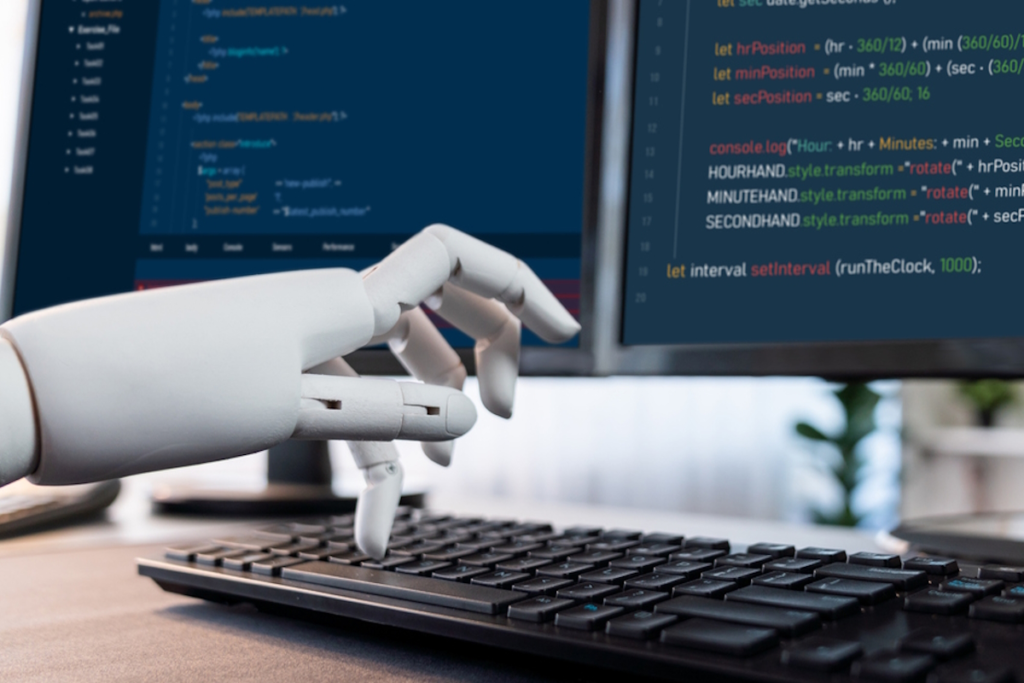
As these systems handle increasingly complex tasks, the fundamental definition of a software engineer is undergoing a massive shift. The industry is moving away from valuing syntactic memorization—the ability to write code from pure memory without searching references—and moving toward system orchestration and architectural design.
Tomorrow’s successful developers will operate more like technical editors and conductors. They will oversee teams of autonomous AI agents, directing them to build microservices, connect APIs, and construct data pipelines while focusing their own human energy on user experience optimization, system scalability, and mapping technological capabilities directly to complex human business objectives. Embracing this paradigm shift ensures that developers remain highly competitive, using artificial intelligence as a force multiplier to build the next generation of digital infrastructure.
FAQs
1. What are AI-powered coding tools?
AI-powered coding tools use Artificial Intelligence to assist developers with code generation, debugging, code completion, and software development tasks.
2. Can AI coding tools replace developers?
No. AI coding tools are designed to assist developers, not replace them. Human expertise is still required for decision-making, architecture, and problem-solving.
3. Which is the best AI coding assistant?
Popular options include GitHub Copilot, Cursor AI, Tabnine, Amazon CodeWhisperer, and Replit AI.
4. Do AI coding tools improve productivity?
Yes. They help automate repetitive tasks, speed up coding, reduce debugging time, and improve workflow efficiency.