
Artificial intelligence is becoming part of everyday AI Ethics life. It can help people write content, analyze information, create images, develop software, answer questions, automate workflows, and make sense of large amounts of data.
But as AI becomes more powerful, an important question is becoming harder to ignore: How should AI be developed and used responsibly?
This is where AI ethics comes in.
AI ethics is about the principles and practices that help make artificial intelligence safer, fairer, more transparent, accountable, and respectful of people. It is not about stopping innovation. Instead, it is about finding ways to make technological progress while considering its impact on individuals, businesses, and society.
In 2026, understanding AI ethics is becoming increasingly relevant for developers, businesses, governments, educators, and everyday users.
What Is AI Ethics?
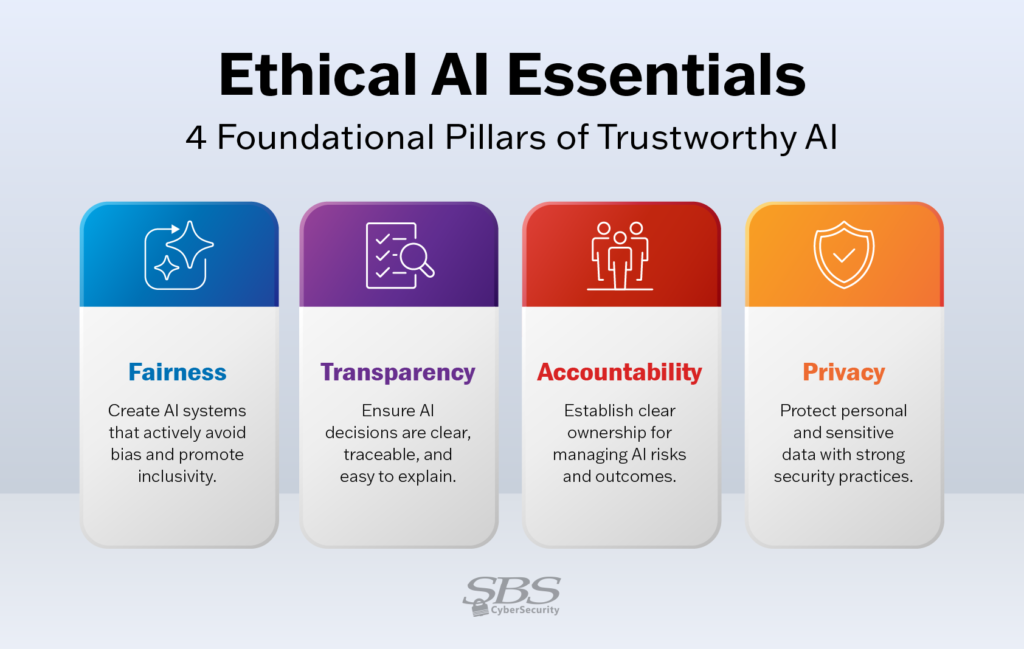
AI ethics refers to the principles used to guide the development, deployment, and use of artificial intelligence.
An AI system may be technically impressive, but that does not automatically mean it is responsible.
For example, an AI system might produce an answer quickly while still providing incorrect information. A model may perform well overall but produce unfair outcomes for certain groups. A platform may offer personalization while collecting more user data than people realize.
AI ethics encourages developers and organizations to think beyond performance.
Key Areas of AI Ethics
| Ethical Area | Main Question |
|---|---|
| Fairness | Does the system treat people fairly? |
| Privacy | How is personal information handled? |
| Transparency | Can people understand how the system is being used? |
| Accountability | Who is responsible when something goes wrong? |
| Safety | Can the system cause or contribute to harm? |
| Security | Can the system or its data be misused? |
| Human Oversight | Can people review important AI decisions? |
These areas often overlap, making AI ethics a broad and continuously developing field.
Why AI Ethics Matters in 2026
AI is no longer limited to research laboratories. It is increasingly integrated into products and services that people interact with every day.
AI can influence what content people see, help organizations analyze applications, assist with customer service, support medical and scientific research, and automate business processes.
The more widely AI is used, the more important it becomes to understand its limitations.
Responsible AI Can Help Build Trust

People are more likely to use technology confidently when they understand how it works and what safeguards exist.
Responsible AI practices can help organizations:
- Protect sensitive information
- Reduce avoidable bias
- Improve transparency
- Identify potential risks
- Establish accountability
- Maintain user trust
Trust is especially important when AI is used in situations involving personal information, finances, employment, education, healthcare, or other high-impact areas.
AI Bias and Fairness
One of the most discussed ethical challenges is bias.
AI systems learn patterns from data. If training data contains incomplete, inaccurate, or historically biased information, an AI system can potentially reproduce or amplify those patterns.
Bias can also enter through how a system is designed, tested, or deployed.
Why AI Bias Is Difficult
AI bias is not always obvious.
A system may appear accurate when measured across an entire dataset but perform differently for specific groups or situations.
That’s why responsible AI development can involve:
Diverse testing: Evaluate systems across different populations and use cases.
Data review: Examine whether training and evaluation data are appropriate.
Ongoing monitoring: Continue checking systems after deployment.
Human review: Give people a way to examine important decisions.
Fairness does not necessarily mean every person receives identical treatment. The appropriate approach depends on the context and purpose of the system.
Privacy and AI

AI systems can process large amounts of information, which makes privacy another major concern.
Depending on the application, data may include user interactions, documents, images, location information, behavioral patterns, or other personal details.
Users should have a reasonable understanding of what information is collected, why it is collected, and how it is used.
Good Privacy Practices
Organizations using AI should consider:
- Collecting only necessary information
- Protecting stored data
- Limiting unnecessary access
- Clearly explaining data practices
- Establishing appropriate retention policies
- Providing meaningful user controls where applicable
For individuals, it is also useful to avoid entering highly sensitive information into AI services unless there is a clear reason and appropriate protection.
Transparency and Explainability
Another important part of AI ethics is transparency.
People may want to know when they are interacting with AI, how an AI-assisted decision was reached, or what information influenced an output.
However, explaining AI systems is not always simple.
Some modern AI models contain enormous numbers of parameters and complex relationships that can be difficult to interpret directly.
What Transparency Can Look Like
Transparency can include:
- Clearly identifying AI-generated content
- Explaining the purpose of an AI system
- Providing information about limitations
- Documenting important system characteristics
- Giving users appropriate information about automated decisions
The level of explanation should match the situation. A simple recommendation may require less explanation than an AI-assisted decision with serious consequences.
Human Oversight Still Matters

One of the most important ideas in responsible AI is that humans should remain involved where human judgment is necessary.
AI can process information quickly, but it does not automatically understand context, values, consequences, or individual circumstances in the same way people do.
For high-impact uses, human oversight can provide an additional layer of review.
Human + AI
| AI Strength | Human Strength |
|---|---|
| Processes large datasets | Understands context |
| Identifies patterns | Applies judgment |
| Automates repetitive tasks | Handles complex social situations |
| Generates possibilities | Evaluates consequences |
| Works quickly | Provides accountability |
The goal is not always to choose between humans and AI. In many situations, the more practical approach is to combine their strengths.
AI Safety and Reliability
AI systems can produce incorrect information, unexpected outputs, or unsafe recommendations.
Generative AI can sometimes produce hallucinations, where a system presents incorrect information as though it were factual.
This is particularly important when AI is used for tasks where mistakes could have serious consequences.
Ways to Improve AI Reliability
Organizations can use:
Testing: Evaluate models before and after deployment.
Monitoring: Track performance and unexpected behavior.
Guardrails: Restrict certain risky actions or outputs.
Human review: Require additional oversight for sensitive decisions.
User feedback: Give people ways to report problems.
No system is perfect, so responsible AI requires continuous evaluation rather than a one-time safety check.
Accountability: Who Is Responsible?
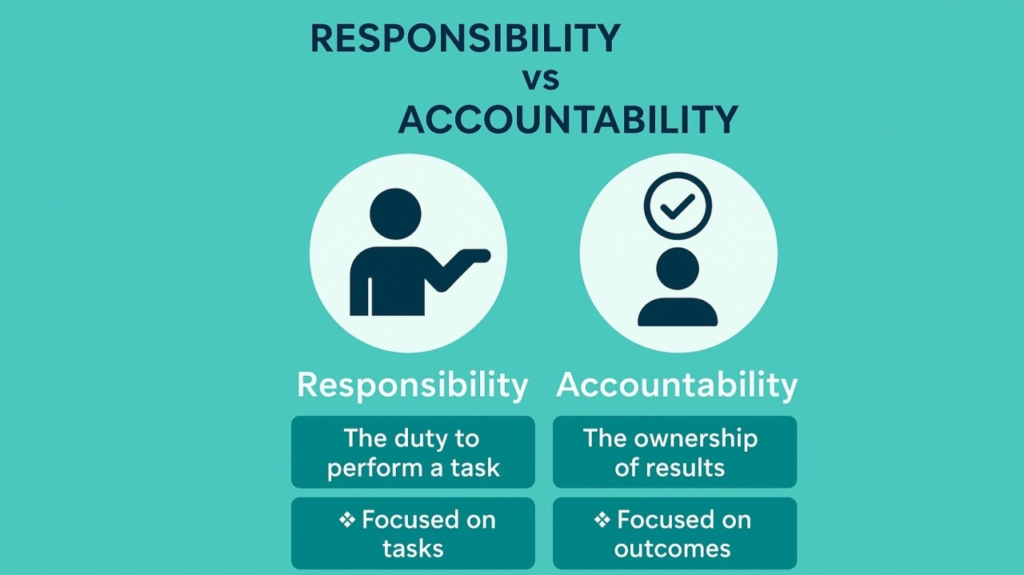
When an AI system makes a mistake, responsibility should not disappear behind the technology.
Organizations need clear processes for determining who designed, deployed, monitored, and approved the system.
Accountability can involve documentation, internal policies, audits, review processes, and clear responsibilities.
A useful principle is simple:
AI can assist with decisions, but responsibility should remain with identifiable people or organizations.
AI and Misinformation
Generative AI has made it easier to create convincing text, images, audio, and video.
This can be useful for creative work, but it also creates challenges around misinformation and manipulated media.
Digital Content Needs More Context
When encountering suspicious content, users can consider:
- Who created it?
- Where was it published?
- Is there an original source?
- Can the claim be independently verified?
- Does the content provide supporting evidence?
- Could the media have been edited or generated?
Tools such as digital provenance and content credentials may provide additional information about the history or origin of some digital content.
However, no single technology can guarantee that every piece of online information is accurate.
Responsible AI in Business
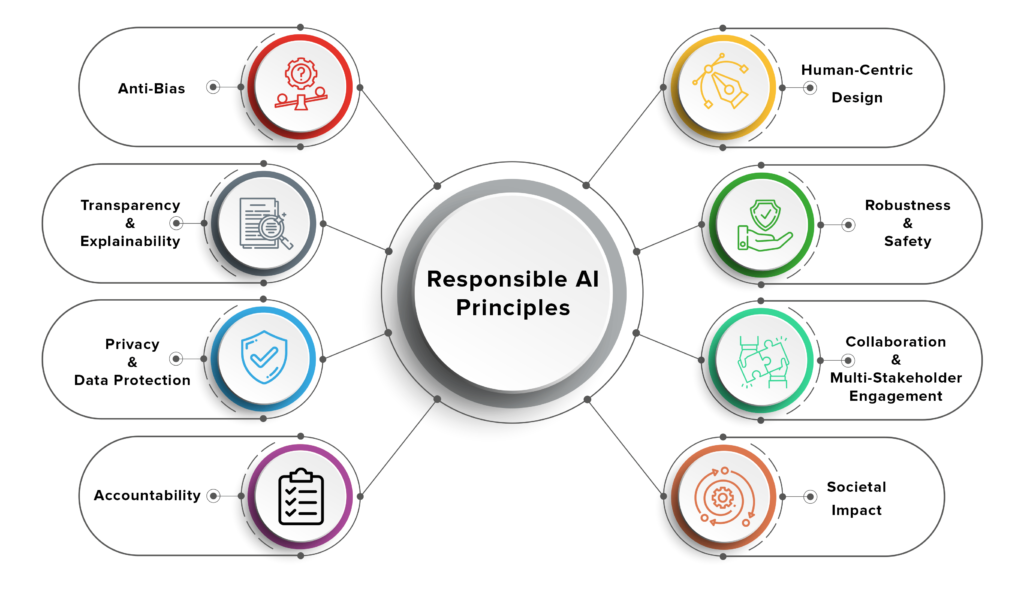
Businesses are increasingly exploring AI for customer service, marketing, software development, research, analytics, and operations.
Before introducing an AI system, organizations should consider more than its potential productivity benefits.
A Responsible Business Approach
| Question | Why It Matters |
|---|---|
| What problem does AI solve? | Prevents unnecessary adoption |
| What data does it use? | Helps manage privacy risks |
| What could go wrong? | Identifies potential harms |
| Who reviews the output? | Establishes accountability |
| How is performance monitored? | Detects problems over time |
| Can users challenge decisions? | Supports fairness and transparency |
This type of planning can make AI adoption more thoughtful and sustainable.
AI Governance Is Becoming More Important
As AI systems become more capable, organizations need clear rules around their use.
AI governance refers to the policies, processes, responsibilities, and controls used to manage AI responsibly.
Governance can cover areas such as:
- Data management
- Model evaluation
- Risk assessment
- Security
- Privacy
- Human oversight
- Documentation
- Compliance
- Incident response
Good governance should not simply create more paperwork. Its purpose is to make responsibilities and safeguards clear.
Simple Responsible AI Habits
Verify important information. Don’t automatically assume an AI-generated answer is correct.
Protect sensitive data. Think carefully before sharing private information with an AI tool.
Disclose AI use when appropriate. In professional, academic, or creative settings, follow the relevant rules.
Review generated content. Check facts, tone, sources, and potential errors.
Question unexpected results. If an AI output seems unusual or biased, investigate further.
These small habits can encourage more responsible use of AI.
The Bigger Picture
The most useful question is not simply:
“Can AI do this?”
It is also:
“Should AI do this, under what conditions, and with what safeguards?”
That shift in thinking is at the heart of AI ethics.
- Master AI Fundamentals 2026: Essential Basics of Artificial Intelligence
- AI Tools 2026: Explore the Future of Smarter Technology
- AI Ethics 2026: The Future of Responsible AI Technology
- Best AI Tools 2026: Powerful Tools for Work, Business & Creativity
- AI Tutorials for Beginners 2026: Simple Guides to Get Started
FAQs
1. What is AI ethics?
AI ethics is the study and practice of developing and using artificial intelligence responsibly, fairly, safely, and transparently.
2. Why is AI ethics important?
It helps address concerns involving privacy, bias, safety, accountability, security, and responsible AI use.
3. What is AI bias?
AI bias occurs when an AI system produces systematically unfair or inaccurate outcomes due to issues in data, design, testing, or deployment.
4. How can AI be used responsibly?
Users can verify important information, protect sensitive data, review AI outputs, and follow appropriate rules for AI use.
5. Does responsible AI stop innovation?
No. Responsible AI aims to support innovation while identifying and managing potential risks.