
Artificial Intelligence (AI) is one of the most exciting technologies shaping the modern world. From voice assistants and recommendation systems to self-driving cars and smart healthcare solutions, AI is transforming the way people live and work. Although AI may seem complex, understanding its basic concepts is easier than many people think. This guide explains the fundamentals of Artificial Intelligence, how it works, its everyday applications, benefits, challenges, and what the future holds for this rapidly evolving technology.
What Is Artificial Intelligence?
Artificial Intelligence is a branch of computer science that focuses on creating systems capable of performing tasks that normally require human intelligence. These tasks include learning from data, recognizing patterns, understanding language, solving problems, making decisions, and improving performance over time. AI systems analyze information and use algorithms to produce accurate and efficient results.
Why AI Is Important
Artificial Intelligence is changing industries by improving efficiency, reducing manual work, and helping organizations make data-driven decisions. Businesses use AI to automate repetitive tasks, healthcare professionals use it to assist with diagnosis, educators personalize learning experiences with AI, and consumers interact with AI through virtual assistants, chatbots, and recommendation engines. As AI adoption continues to grow, understanding its fundamentals is becoming an essential skill.
Types of Artificial Intelligence
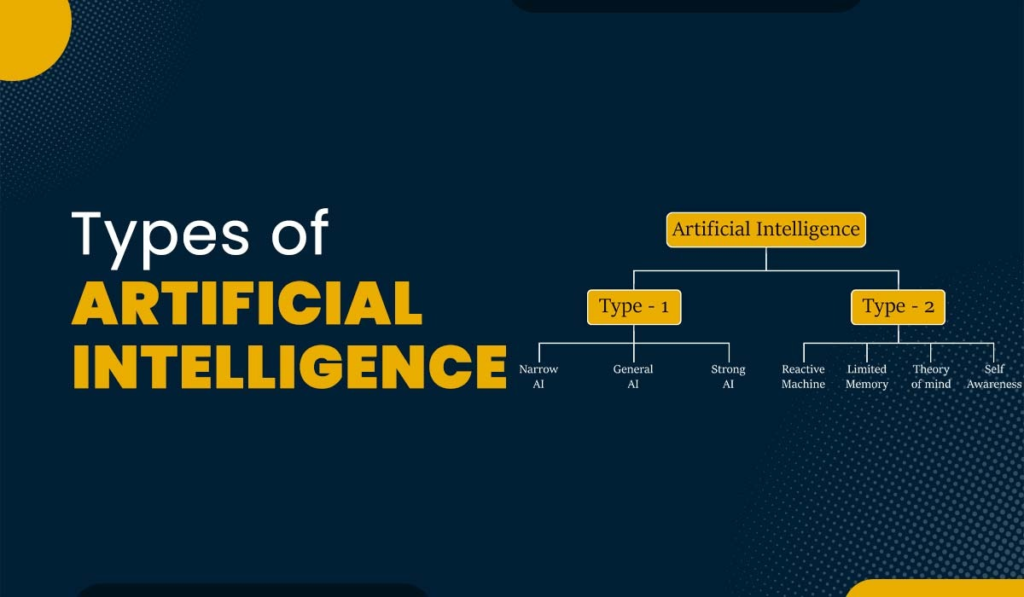
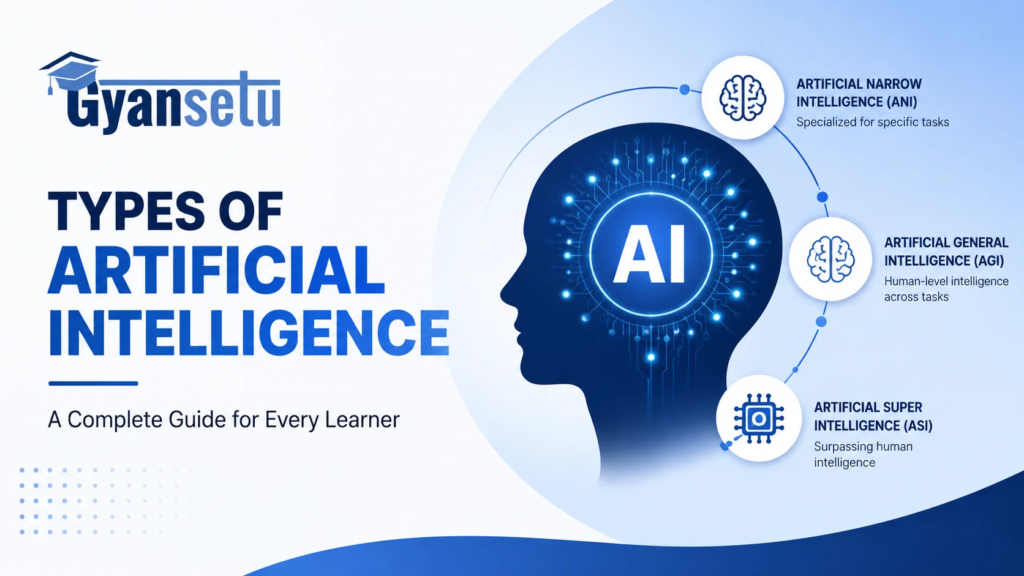
AI is commonly divided into different categories based on its capabilities.
Narrow AI: Designed to perform a specific task, such as voice recognition or language translation.
General AI: A theoretical form of AI that could perform any intellectual task a human can do.
Super AI: A hypothetical future AI that would surpass human intelligence in every field.
Today, most AI applications belong to the Narrow AI category.
How Artificial Intelligence Works
AI systems learn from large amounts of data using algorithms and mathematical models. They identify patterns, make predictions, and improve their performance through continuous learning. The basic AI process includes:
- Collecting data
- Training AI models
- Testing accuracy
- Making predictions or decisions
- Continuously improving through new data
This process allows AI systems to become more accurate and efficient over time.
Key Technologies Behind AI

Several advanced technologies work together to make Artificial Intelligence possible. Machine Learning allows computers to learn from data without being explicitly programmed for every task. Deep Learning uses complex neural networks to process images, speech, and large datasets with remarkable accuracy. Natural Language Processing enables AI to understand and generate human language, making chatbots and virtual assistants possible. Computer Vision helps machines recognize and interpret images and videos, while Robotics combines AI with physical machines to automate tasks in manufacturing, healthcare, and logistics.
Everyday Applications of AI
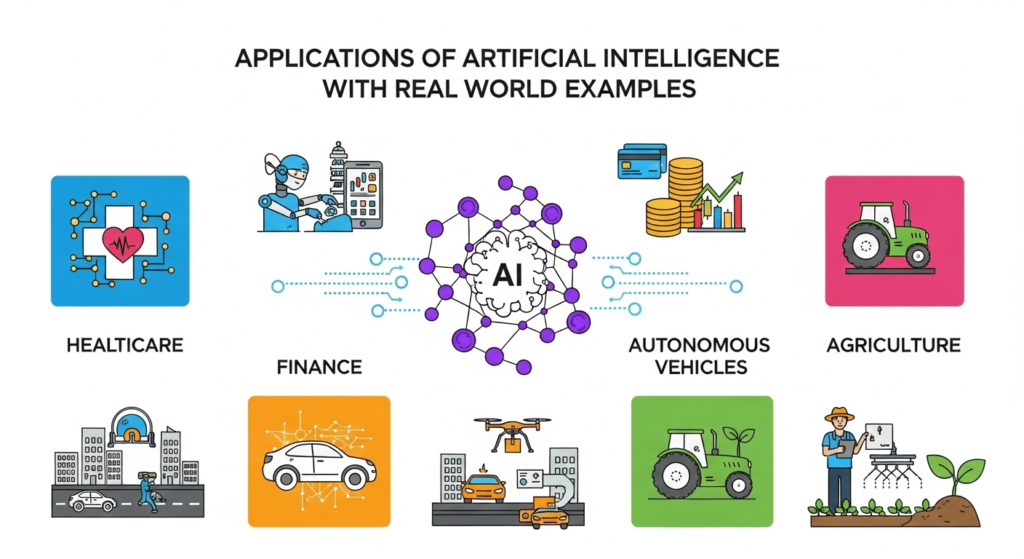
Artificial Intelligence has become part of everyday life, even if many people do not realize it. Voice assistants such as Siri and Google Assistant respond to spoken commands, while streaming services recommend movies and music based on viewing habits. Online shopping platforms use AI to suggest products, navigation apps provide the fastest routes using real-time traffic data, and email services automatically filter spam messages. AI also powers language translation, facial recognition, smart home devices, and customer service chatbots, making everyday tasks more convenient and efficient.
Benefits of Artificial Intelligence
AI offers many advantages across industries and everyday life.
- Automates repetitive tasks
- Increases productivity
- Improves decision-making
- Reduces human error
- Enhances customer experiences
- Processes large amounts of data quickly
- Supports innovation and business growth
These benefits help organizations improve efficiency while allowing people to focus on higher-value work.
Challenges of AI
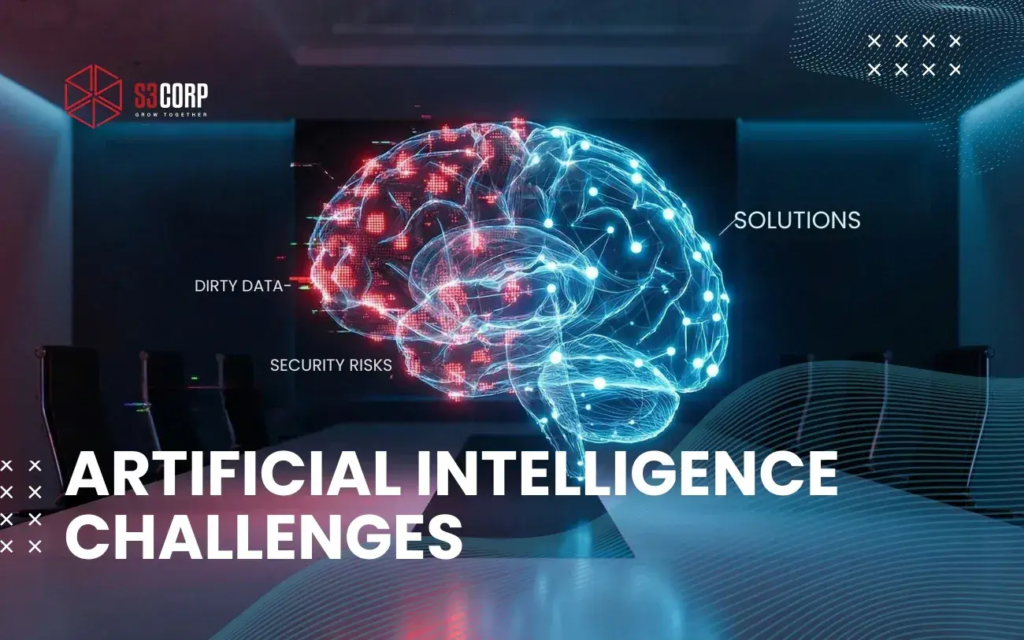
Although AI provides many benefits, it also presents several important challenges. Concerns about data privacy and cybersecurity continue to grow as AI systems rely on large datasets. Bias in AI algorithms can produce unfair outcomes if the training data is not balanced, and ethical questions arise when AI is used to make decisions that affect people’s lives. Additionally, implementing AI solutions often requires significant investment, skilled professionals, and ongoing maintenance. Addressing these challenges responsibly is essential for building trustworthy AI systems.
AI Across Different Industries
Artificial Intelligence is transforming many sectors, including:
- Healthcare
- Finance
- Education
- Retail
- Manufacturing
- Transportation
- Agriculture
- Marketing
- Customer Service
- Cybersecurity
Each industry uses AI to improve efficiency, automate processes, and deliver better services.
How to Start Learning AI

Beginners can start by learning the basics of programming, mathematics, and data analysis. Understanding Machine Learning, exploring free online courses, experimenting with beginner-friendly AI tools, and working on small projects are excellent ways to build practical knowledge. Consistent practice and curiosity are key to developing AI skills.
The Future of Artificial Intelligence
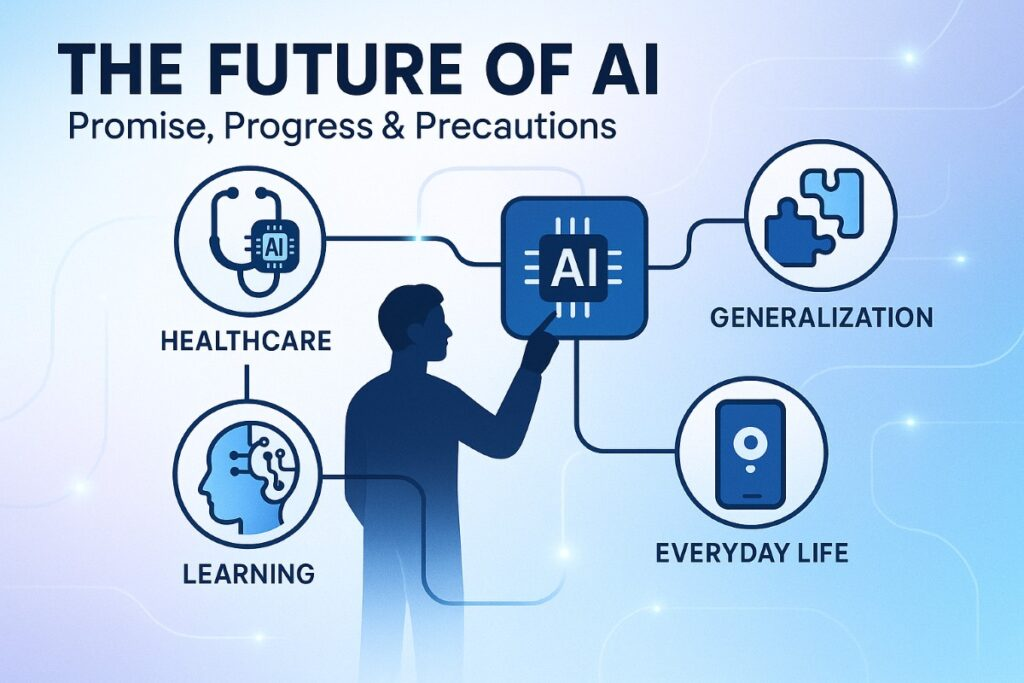
Artificial Intelligence is expected to become even more advanced in the coming years. Future developments may include smarter virtual assistants, autonomous vehicles, AI-powered healthcare systems, personalized education, intelligent business automation, and scientific discoveries. As AI continues to evolve, it will create new opportunities while requiring thoughtful governance and ethical use.
FAQs
1. What is Artificial Intelligence?
Artificial Intelligence is a field of computer science that enables machines to perform tasks that normally require human intelligence, such as learning, reasoning, and decision-making.
2. What are the main types of AI?
The three main types are Narrow AI, General AI, and Super AI. Today, most AI applications are Narrow AI.
3. What is Machine Learning?
Machine Learning is a branch of AI that enables computers to learn from data and improve their performance without being explicitly programmed for every task.
4. Where is AI used in everyday life?
AI is used in virtual assistants, streaming recommendations, online shopping, navigation apps, chatbots, healthcare, finance, and smart home devices.
5. What are the benefits of AI?
AI improves productivity, automates repetitive tasks, enhances decision-making, reduces errors, and supports innovation across industries.