
Artificial Intelligence (AI) is one of the most exciting technologies shaping the modern world. From voice assistants and recommendation systems to self-driving cars and smart healthcare solutions, AI is becoming an important part of our daily lives. Businesses are using AI to improve productivity, schools are using it to personalize learning, and individuals are using AI-powered tools to simplify everyday tasks.
If you’re new to Artificial Intelligence, understanding the basics is the first step toward exploring this rapidly growing field. This guide explains the fundamental concepts of AI in simple language, helping beginners build a strong foundation before moving on to more advanced topics.
What Is Artificial Intelligence?
Artificial Intelligence is a branch of computer science that enables machines and software to perform tasks that normally require human intelligence. These tasks include learning from data, recognizing images and speech, understanding natural language, solving problems, making decisions, and identifying patterns.
Unlike traditional software that follows fixed instructions, AI systems can improve their performance by learning from experience and analyzing large amounts of data. This ability makes AI useful for solving complex problems across many industries.
Why AI Matters

AI is transforming the way people live and work. It helps automate repetitive tasks, improves decision-making, increases efficiency, and creates personalized experiences for users. Businesses use AI to analyze customer behavior, hospitals use it to support medical diagnoses, and educational platforms use AI to customize learning experiences.
As AI continues to evolve, having a basic understanding of its concepts is becoming a valuable skill for students, professionals, and business owners alike.
Key AI Concepts Every Beginner Should Know
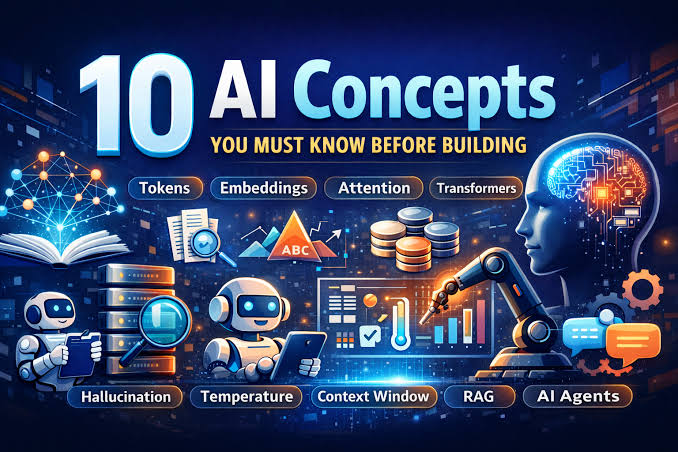
Understanding a few core concepts makes learning AI much easier.
Machine Learning (ML): A method that allows computers to learn from data without being explicitly programmed for every task.
Deep Learning: A specialized area of machine learning that uses neural networks to solve complex problems such as image recognition and speech processing.
Natural Language Processing (NLP): Technology that enables computers to understand, interpret, and generate human language. Chatbots, virtual assistants, and translation tools rely on NLP.
Computer Vision: AI that allows machines to recognize and analyze images and videos. It is widely used in facial recognition, medical imaging, and autonomous vehicles.
Generative AI: AI systems that create new content, including text, images, audio, videos, and computer code based on user prompts.
Types of Artificial Intelligence
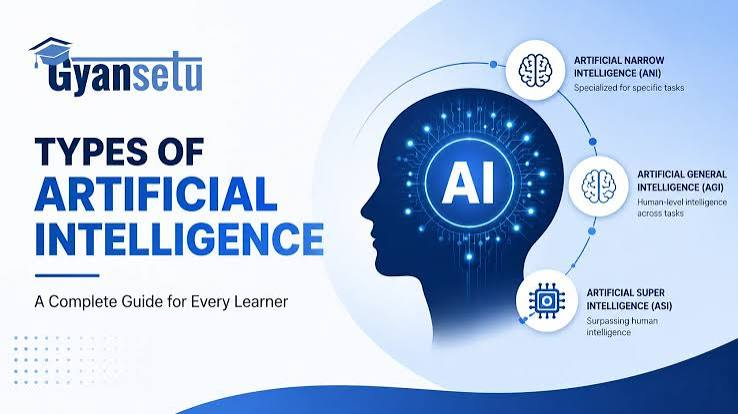
AI can be divided into different categories based on its capabilities.
Narrow AI
Also known as Weak AI, Narrow AI is designed to perform a specific task. Examples include recommendation systems, voice assistants, spam filters, and navigation apps. Most AI applications used today fall into this category.
General AI
General AI refers to machines that could perform any intellectual task that humans can do. This type of AI remains a research goal and has not yet been achieved.
Super AI
Super AI is a theoretical concept where machines would surpass human intelligence in every area. While often discussed in science fiction, it does not currently exist.
How AI Works
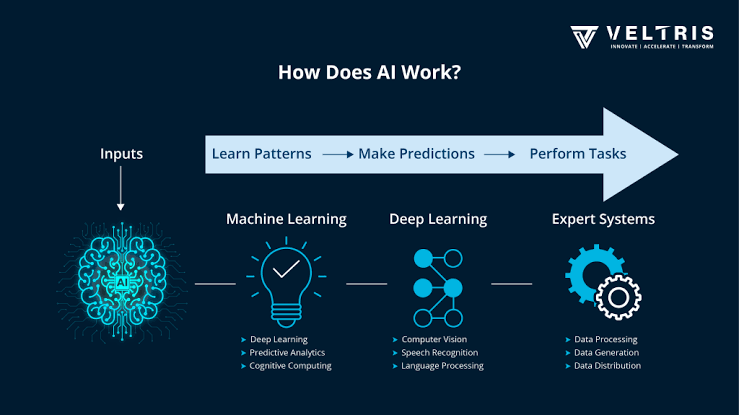
AI systems learn by analyzing large amounts of data and identifying patterns. Developers first collect relevant data, then train AI models using machine learning algorithms. After training, the models are tested and improved before being used in real-world applications.
The quality of the data plays a major role in how accurately an AI system performs. Better data usually leads to better predictions and more reliable results.
Real-World Applications of AI
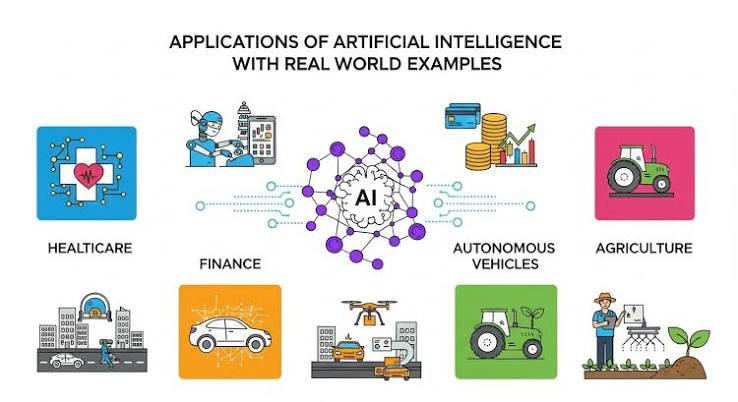
AI is already improving many aspects of everyday life.
Some common applications include:
- Virtual assistants like Siri and Google Assistant
- Online shopping recommendations
- Fraud detection in banking
- AI-powered chatbots
- Medical diagnosis support
- Language translation tools
- Self-driving vehicle technology
- Smart home devices
- Personalized streaming recommendations
- AI content creation tools
These examples demonstrate how AI has become part of modern life without many people even realizing it.
Benefits of AI

Artificial Intelligence offers many advantages for individuals and businesses. It can automate repetitive tasks, increase productivity, improve decision-making, reduce human error, analyze large amounts of data quickly, and provide personalized user experiences. AI also supports innovation in healthcare, education, finance, manufacturing, and many other industries.
As AI technology continues to improve, its ability to solve complex problems will become even more valuable.
Challenges of AI
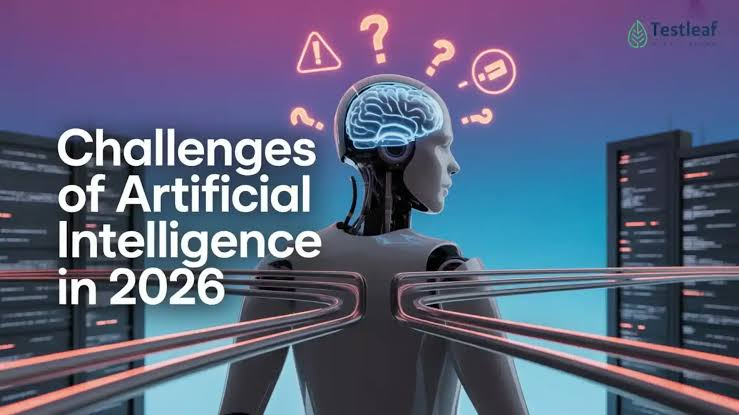
Despite its benefits, AI also presents important challenges. Privacy concerns, cybersecurity risks, biased algorithms, misinformation, and ethical issues require careful attention. There are also concerns about how automation may affect certain jobs, making continuous learning and skill development increasingly important.
Responsible AI development focuses on transparency, fairness, and protecting user data.
Skills to Learn Before Studying AI
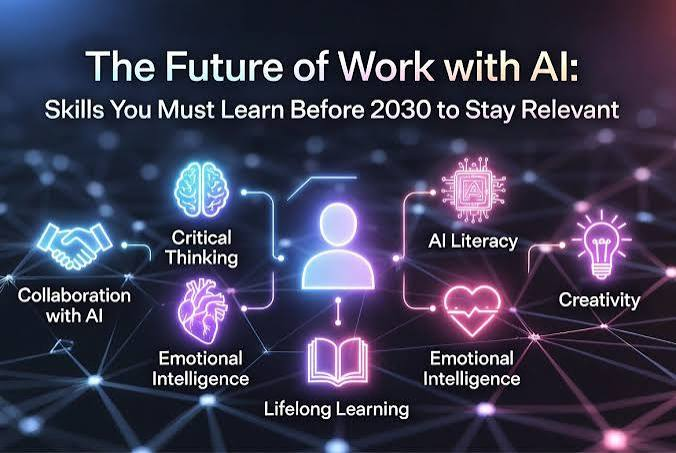
You don’t need to be an expert programmer to begin learning AI, but having a few basic skills can make the journey easier.
Helpful skills include:
- Basic computer knowledge
- Logical thinking and problem-solving
- Mathematics (especially algebra and statistics)
- Basic programming, such as Python
- Data analysis fundamentals
- Curiosity and a willingness to learn
These skills provide a strong foundation for exploring more advanced AI topics.
How Beginners Can Start Learning AI
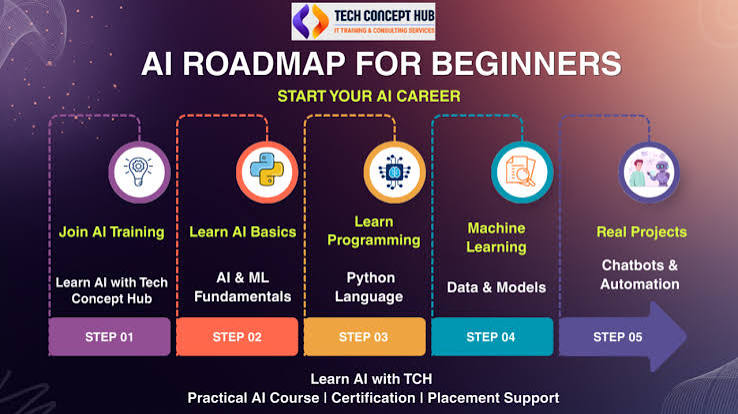
Learning AI is easier than ever thanks to free and affordable online resources. Start by understanding the basic concepts before moving on to programming and practical projects. Watch beginner-friendly tutorials, read articles, experiment with simple AI tools, and gradually build your knowledge through hands-on practice.
Don’t try to learn everything at once. Focus on one concept at a time and apply what you learn through small projects.
The Future of AI
Artificial Intelligence will continue to influence almost every industry over the next decade. Future developments may include smarter virtual assistants, more advanced robotics, improved healthcare systems, personalized education, autonomous transportation, and sustainable technologies powered by AI.
As these innovations become more common, understanding AI fundamentals will become an increasingly valuable skill for people in every profession.
Artificial Intelligence is no longer a technology of the future—it’s already changing the way we live and work. Learning the fundamentals of AI helps you understand how intelligent systems make decisions, solve problems, and improve everyday experiences. Whether you’re a student, a professional, or simply curious about technology, building a strong foundation in AI will prepare you for a world where artificial intelligence plays an even bigger role.
Start with the basics, keep learning consistently, and practice using AI tools whenever possible. With time and curiosity, you’ll gain the knowledge and confidence to explore more advanced AI concepts and opportunities.
FAQs
1. What are AI fundamentals?
AI fundamentals are the basic concepts of Artificial Intelligence, including machine learning, deep learning, natural language processing, and computer vision.
2. Is AI difficult for beginners to learn?
No. Beginners can start by learning the basic concepts and gradually move to programming and practical projects.
3. What programming language is best for AI?
Python is the most popular programming language for learning and developing AI applications.
4. Where is AI used in everyday life?
AI is used in smartphones, virtual assistants, online shopping, healthcare, banking, education, navigation apps, and streaming platforms.