
Let’s be completely honest about the state of our world in 2026: artificial intelligence is no longer some futuristic concept confined to sci-fi movies or sterile corporate research labs. It has officially woven itself into the fabric of our everyday existence, quietly operating behind the scenes of the digital tools, applications, and services we rely on from the moment we wake up until we drift off to sleep. We don’t even think twice about it anymore; it is just there, running in the background of our lives.
The real magic of modern technology isn’t that it is flashy or loud; it’s that it is incredibly subtle. Whether it is optimizing your morning commute, filtering your chaotic work inbox, curating your evening entertainment, or helping your doctor catch health issues early, smart software is fundamentally altering how we interact with our environment. This shift isn’t about giving up our human agency to cold machines. Instead, it is about using intelligent automation to eliminate routine friction, save precious time, and allow us to focus on the things that truly matter to us. When you look closely at your daily routine, you quickly realize just how profoundly this quiet revolution has updated the human experience.
[Cluttered, Frantic Daily Routines] ──> Inject Contextual AI Systems ──> Streamlined, Intentional Modern Living
The Smarter Home: Moving Beyond Basic Voice Commands
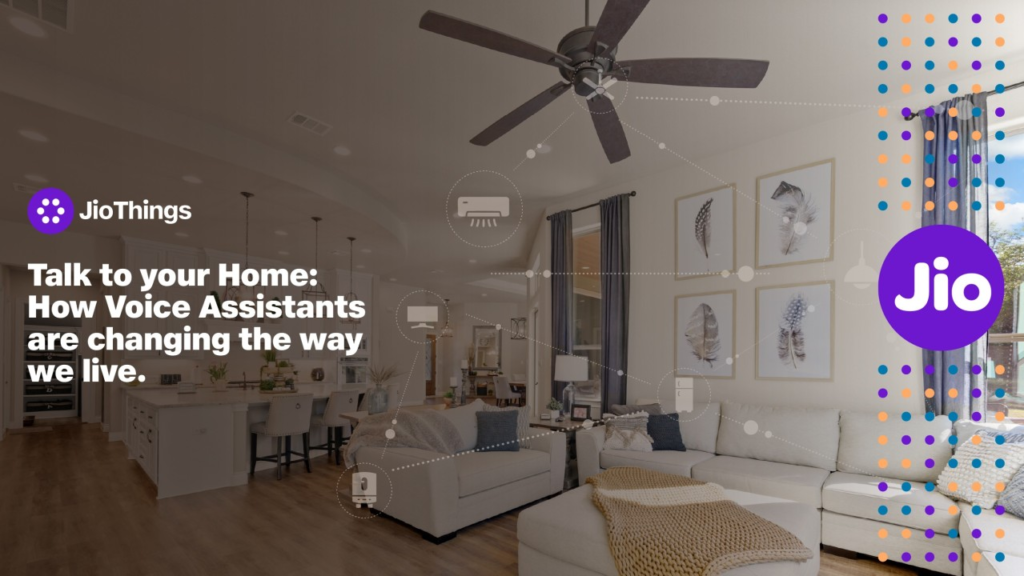
Remember when having a “smart home” just meant screaming at a small speaker to set a kitchen timer or change a music track? In the past, managing connected devices felt more like a frustrating gimmick than a true convenience, requiring you to manually program complex schedules into dozens of clunky smartphone apps.
+------------------------------------+------------------------------------+
| Old Connected Home Limitations     | Context-Aware Living Spaces        |
+------------------------------------+------------------------------------+
| Rigid, manually programmed timers  | Continuous habit-pattern learning  |
| Loud, frustrating voice commands   | Predictive adjustments in silence  |
| High energy waste from forgetting  | Automated eco-mode resource sweeps |
+------------------------------------+------------------------------------+
Today, your living space operates with a deep sense of predictive, context-aware intuition. Modern environmental systems quietly study your daily movement patterns, observing when you wake up, what temperature you prefer when it rains, and exactly when you leave the house for work. Instead of waiting for a manual command, your home automatically dims the lighting to match natural circadian rhythms, lowers energy consumption when rooms are empty, and arms security perimeters based on your location data. This seamless integration turns your physical house into a living, breathing sanctuary that actively protects your resources and cradles your daily comfort without you ever lifting a finger.
Digital Companions: Designing Proactive Daily Frameworks
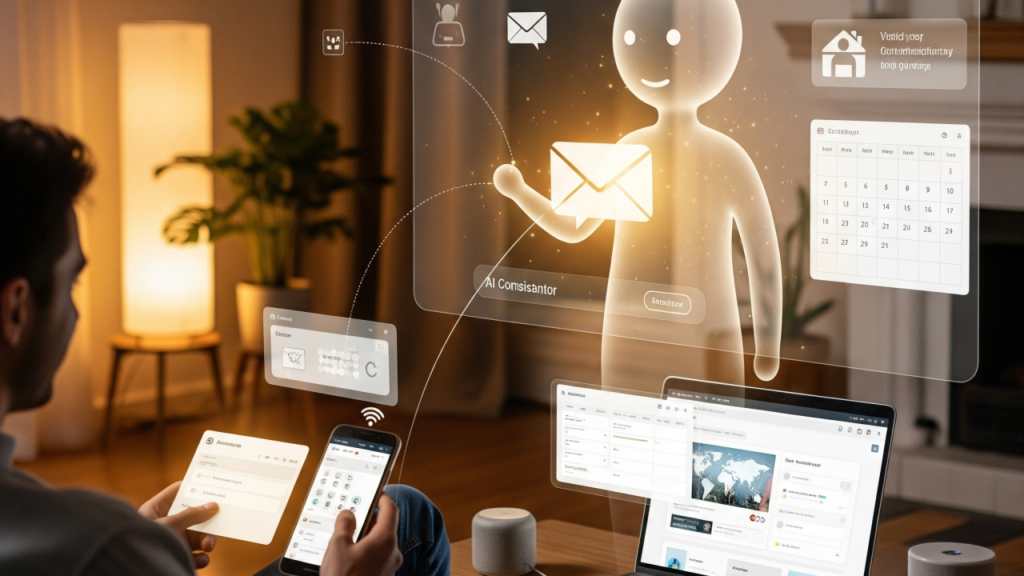
For the longest time, digital personal assistants were little more than hands-free search engines that regularly misunderstood your questions or read back generic web snippets. They felt rigid, reactive, and entirely disconnected from the actual nuance of your personal and professional obligations.
[Fragmented, Chaotic To-Do Lists] ──> Proactive Contextual Assistant ──> Organized, Flow-State Productivity
Modern conversational assistants have evolved into deeply integrated, highly proactive life managers. They don’t just wait for you to ask for a weather update; they look at your calendar, notice a major storm is rolling in right when you have an off-site meeting, and automatically suggest shifting your schedule or pre-booking a rideshare. For a busy professional, these systems can instantly draft meeting agendas and sort priority emails; for a student, they can break down complex research topics into custom, step-by-step study plans. By handling the mental heavy lifting of daily logistics, these tools dramatically reduce decision fatigue and keep you grounded in a state of productive focus.
The Hybrid Workplace: Eradicating the Grunt Work
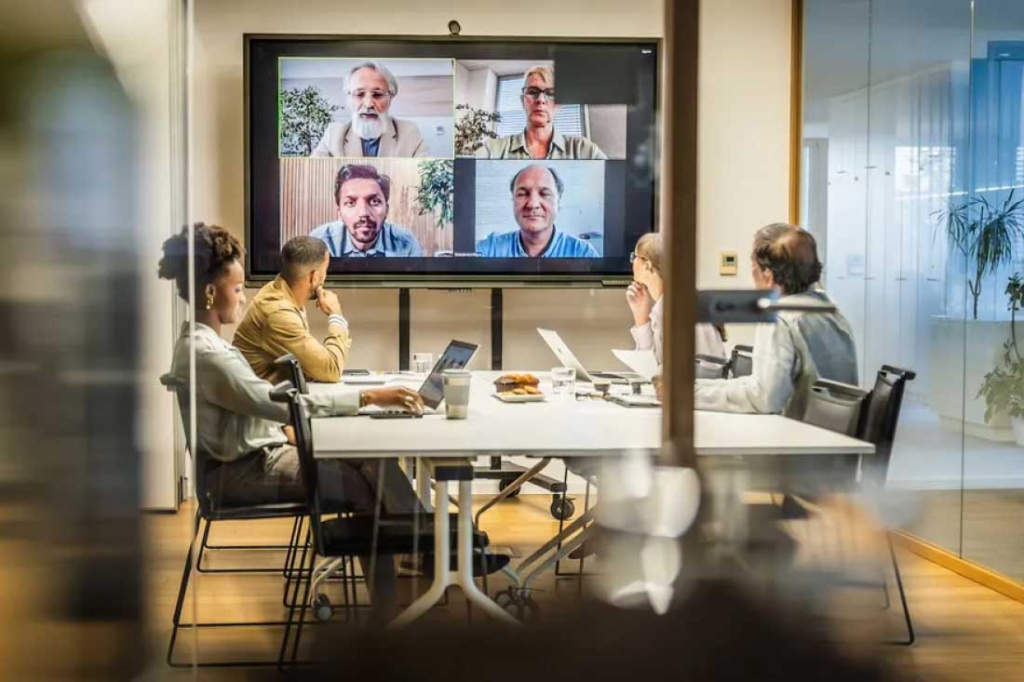
There is a deep-seated, anxiety-fueled narrative that automation is coming to steal everyone’s job, leaving human professionals obsolete. However, if you look at how modern workplaces actually function today, the reality is completely different. Technology isn’t replacing human talent; it is liberating professionals from the soul-crushing administrative tasks that drain creative energy.
          ┌────────────────────────────────┐
          │   The Human-AI Work Synergy   │
          └───────────────┬────────────────┘
                          │
         ┌────────────────┼────────────────┐
         ▼                ▼                ▼
┌─────────────────┐ ┌───────────────┐ ┌──────────────────┐
│ Automated Admin │ │ Data Insights │ │ Creative Focus   │
│ Transcribe notes│ │ Surface clear │ │ Humans design    │
│ and clean files  │ │ market trends │ │ unique strategy  │
└─────────────────┘ └───────────────┘ └──────────────────┘
Employees now routinely use smart systems to instantly summarize hours of meeting audio, clean up messy datasets, draft standard business correspondence, and map out operational workflows. When you offload these repetitive chores to an intelligent digital partner, you instantly free up massive blocks of mental bandwidth. This allows human workers to spend their premium hours doing what they do best: engaging in high-level strategic thinking, building authentic client relationships, and executing complex, empathetic problem-solving that no algorithm could ever replicate.
Hyper-Personalized Media: The End of the Endless Scroll
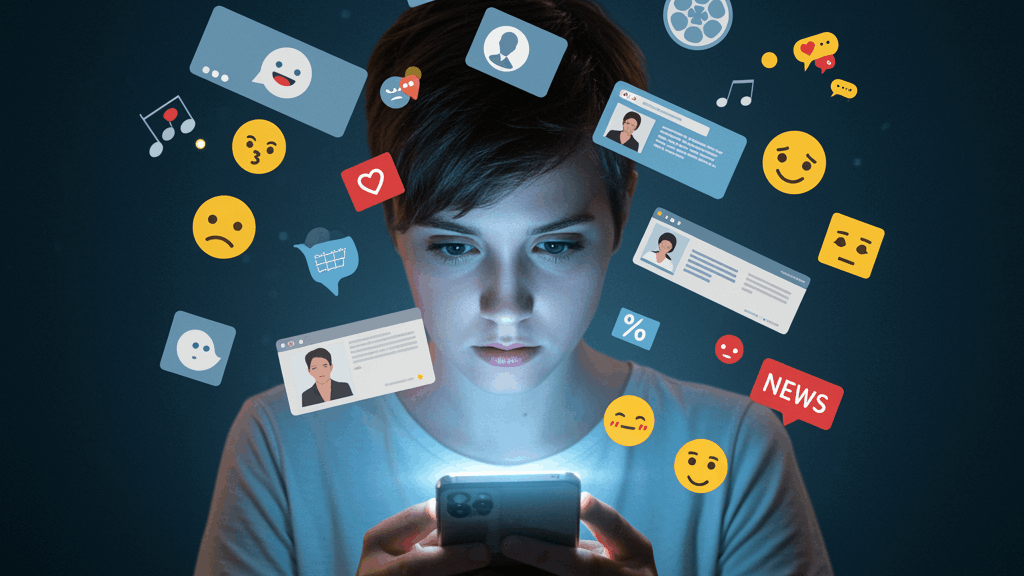
We have all experienced the exhausting frustration of sitting down on the couch after a long workday, opening a streaming app, and spending thirty minutes aimlessly scrolling through thousands of random movie titles without ever picking one. Traditional content distribution platforms used to dump massive, unorganized catalogs onto our screens, creating intense choice paralysis.
Algorithmic entertainment models have solved this issue by developing a profound, real-time understanding of individual human preferences. By analyzing your subtle viewing habits—not just what you click on, but how long you stay engaged, what time of day you watch specific genres, and what style of storytelling keeps your attention—entertainment platforms can instantly surface hyper-relevant books, music, and films tailored to your current mood. This direct curation saves you immense amounts of time, transforming your media consumption into an elite, highly relevant experience that introduces you to art you genuinely love.
Frictionless Commerce: Retail Spaces Engineered for You

The traditional online shopping experience used to feel like an aggravating digital scavenger hunt. You would type vague keywords into a search bar, wade through pages of irrelevant sponsored products, read hundreds of sketchy, unverified reviews, and hope for the best.
Modern digital commerce has been completely re-engineered into a smooth, conversational, and highly personalized retail landscape. Smart shopping assistants can now act as your personal stylist or technical consultant, helping you compare complex product specifications, source items that match your exact wardrobe dimensions, and track down real value based on your historical budget boundaries. Behind the scenes, automated inventory logistics ensure that customer service centers can resolve order issues instantly through smart chat platforms, creating a highly satisfying, stress-free ecosystem for buyers and sellers alike.
Wellness and Preventive Care: Empowering the Individual

The traditional healthcare system has historically operated on a reactive model: you get sick, you book an appointment, and you receive treatment. While medical expertise remains irreplaceable, this defensive approach often catches health complications much later than it ideally should.
[Reactive Emergency Care] ──> Wearable Sensor Sweeps ──> Early Bio-Marker Detection ──> Long-Term Vitality
Intelligent health tech has fundamentally shifted the paradigm toward proactive wellness and continuous preventive monitoring. Everyday wearables and fitness applications now use advanced pattern recognition to track subtle shifts in your sleep architecture, resting heart rate, and daily activity levels, transforming raw biological data into clear wellness guidance. In clinical settings, these systems assist medical professionals by scanning massive medical imaging databases to flag anomalies with incredible precision. This powerful combination of machine processing and human clinical judgment ensures faster diagnostic timelines and highly customized patient care plans that support long-term vitality.
Adaptive Learning: Dismantling the Factory-Model Classroom

For over a century, traditional education has relied on a rigid, factory-style framework: one teacher stands in front of thirty students, delivering the exact same lesson at the exact same pace, regardless of individual learning styles or personal comprehension speeds. This outdated system naturally leaves struggling students behind while causing advanced learners to lose interest.
Modern adaptive educational platforms are completely personalizing the learning journey by dynamically adjusting course curriculums to match a student’s real-time performance. If a student slips up on a specific algebraic concept, the software instantly identifies the underlying knowledge gap, customizes the homework presentation, and supplies targeted interactive tutorials to build foundational confidence. At the same time, it handles tedious grading and administrative tasks for educators, giving teachers the open schedule they need to provide deep, one-on-one mentorship and emotional support to their students.
Intelligent Navigation: Navigating an Unpredictable World
There was a time when traveling through a major metropolitan city required a paper map, a lot of guesswork, and a massive amount of patience. Even early digital GPS systems were relatively static, often routing drivers directly into massive traffic jams or active construction zones because their maps only updated periodically.
The Autonomous Transit Shift: Modern navigation networks operate as a massive, real-time collaborative brain. By processing live data from millions of connected vehicles, transit sensors, and weather networks simultaneously, navigation software can instantly predict traffic bottlenecks, recalculate routes ahead of time, and offer alternative transit options before you get stuck. Furthermore, these real-time calculations lay the foundation for advanced driver-assistance systems, dramatically lowering accident rates and making our public roadways vastly safer, more efficient, and completely stress-free.
Breaking Down Global Barriers: True Universal Translation
Language barriers have historically stood as one of the most significant obstacles to global human connection, cross-border business collaboration, and authentic cultural exchange. Traditional translation software often produced stiff, literal, and frequently inaccurate results that completely missed cultural context and local idioms.
Stiff Word-for-Word Translation ──> Contextual Idiom Processing ──> Authentic Global Human Connection
We now have access to communication tools that offer near-instantaneous, context-aware translation across hundreds of distinct languages. Modern translation systems don’t just swap words out dictionary-style; they analyze tone, emotional intent, and regional dialects, allowing individuals from completely different sides of the planet to experience fluid, meaningful conversations in real-time. For international businesses, this means being able to support global customers with authentic, localized empathy, turning our massive planet into a highly accessible, deeply connected community.
Navigating the Ethical Boundaries: Security, Trust, and Privacy

While the widespread convenience of integrated technology is undeniable, welcoming these intelligent systems into our homes, workplaces, and personal devices requires us to confront some incredibly serious societal challenges. We cannot afford to consume innovation blindly without questioning the underlying costs.
The rapid expansion of data-hungry algorithms raises critical concerns regarding personal data privacy, digital security, and the spreading of highly convincing misinformation. Because these tools learn by analyzing human behavior, ensuring our information is protected from exploitation is an absolute priority. Navigating this landscape safely means demanding absolute transparency from tech developers, practicing strict digital hygiene, and using these tools with an analytical mind. Balancing rapid digital innovation with deep personal responsibility is the only way to build an environment where technology serves humanity safely.
Cultivating the Human Advantage in a Connected World
Ultimately, the goal of artificial intelligence is not to turn human beings into passive spectators in their own lives, nor is it to build a cold, hyper-optimized world devoid of art and spontaneous emotion. The true purpose of these advanced systems is to handle the predictable logistics of life so that we can be more fully human.
Automate Logistical Noise ──> Reclaim Open Bandwidth ──> Cultivate Real-World Human Artistry
By using these intelligent tools to organize our schedules, optimize our tasks, and streamline our professional workflows, we reclaim our most valuable resource: open time. We free up the mental energy required to cultivate deep real-world relationships, pursue creative passions, explore complex ideas, and build intentional communities. As we move forward into this highly collaborative era, the true markers of success will belong to those who learn to utilize these systems responsibly, creating a beautiful, highly efficient world where technology acts as the ultimate support system for human artistry and connection.
FAQs
1. How is AI used in everyday life?
AI is used in smart devices, virtual assistants, online shopping, healthcare, education, navigation, and entertainment services.
2. Can AI make daily tasks easier?
Yes. AI helps automate routine tasks, organize information, provide recommendations, and improve productivity.
3. Is AI replacing humans in the workplace?
AI mainly supports workers by handling repetitive tasks, while human creativity, decision-making, and emotional understanding remain important.